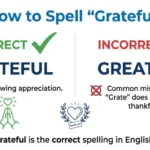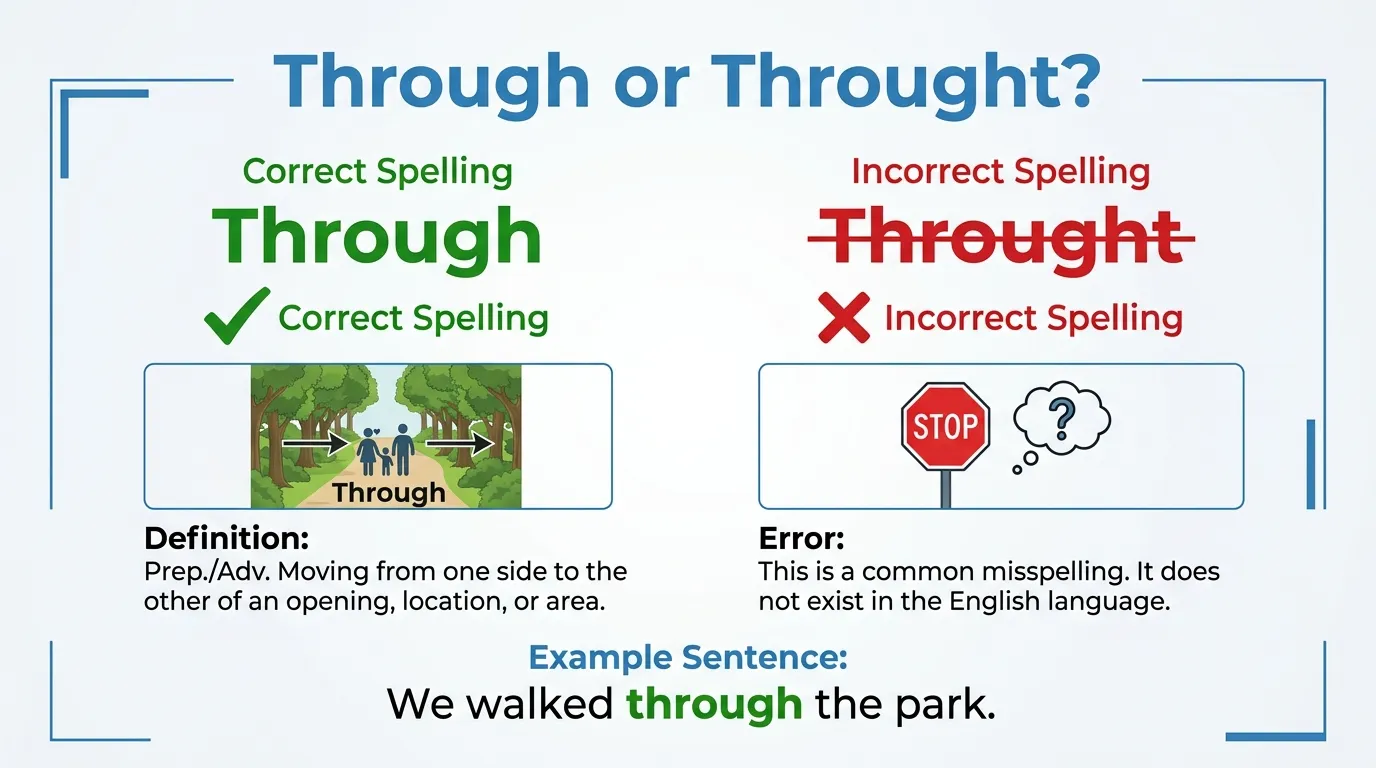
Through is the correct spelling ✅, while throught is a common misspelling and should not be used in standard English.
English spelling can be confusing, especially when two words look almost the same. One common search is “throught or through.” Many people wonder if throught is a real word or simply a misspelling of through.
This confusion often happens because English contains many words ending in -ough, such as thought, brought, though, and through. Since these words look similar, writers sometimes accidentally add a t to through, creating throught.
Knowing the correct spelling is important for emails, school assignments, websites, social media posts, and professional documents. A small spelling mistake can make your writing appear less accurate and may distract readers from your message.
In this guide, you’ll learn the correct spelling, the origin of the word, British and American English usage, common mistakes, real-life examples, Google Trends insights, and answers to frequently asked questions. By the end, you’ll know exactly when and how to use through correctly.
Throught or Through : Quick Answer
Through is the correct spelling. ✅
Throught is incorrect and is considered a misspelling. ❌
Examples
We walked through the park.
She read through the entire report.
The train passed through the tunnel.
❌ We walked throught the park.
❌ She read throught the report.
The Origin of Throught or Through
The word through comes from Old English thurh or thuruh, which meant “from one side to another” or “by means of.”
Over time, the spelling evolved into the modern form through. The word has been used in English for centuries and remains one of the most common prepositions and adverbs.
The spelling throught does not have a historical origin in standard English. It usually appears because writers confuse through with words like:
- thought
- brought
- fought
Since these words end in -ought, people sometimes mistakenly write throught.
British English vs American English Spelling
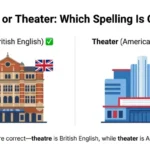
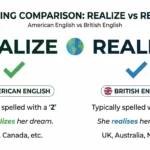
There is no spelling difference between British and American English.
Both varieties use through.
Comparison Table
| Usage | British English | American English |
| Correct spelling | Through | Through |
| Incorrect spelling | Throught | Throught |
| Formal writing | Through | Through |
| Everyday writing | Through | Through |
Examples
British English
✔ Walk through the door.
American English
✔ Walk through the door.
Which Spelling Should You Use?
For US Readers
Always use through.
For UK Readers
Always use through.
For Australia, Canada, and New Zealand
Always use through.
For Global Audiences
Use through because it is the only accepted spelling in modern English.
Common Mistakes with Throught or Through
Here are some frequent spelling errors.
| Incorrect | Correct |
| Throught the window | Through the window |
| Read throught it | Read through it |
| Drive throught town | Drive through town |
| Walk throught the gate | Walk through the gate |
Why This Mistake Happens
People often mix through with words such as:
- thought
- brought
- fought
These words contain -ought, but through does not.
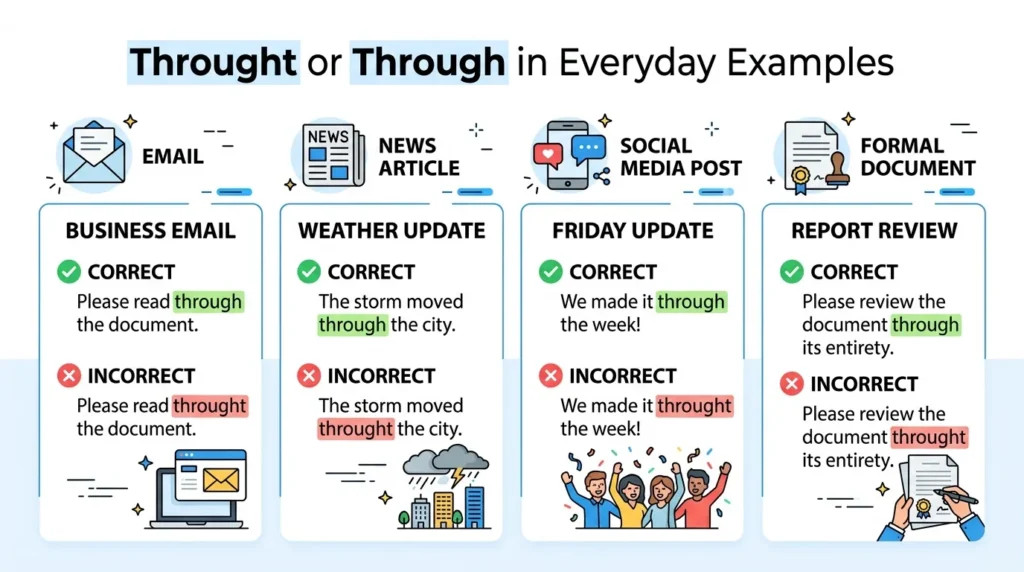
Throught or Through in Everyday Examples
Emails
✔ Please read through the document before signing.
✔ I looked through your suggestions.
News Reports
✔ The storm moved through the region overnight.
✔ The road runs through the city center.
Social Media
✔ We made it through the week! 🎉
✔ Looking through old photos today.
Formal Writing
✔ The information was reviewed through multiple stages.
✔ The project progressed through several phases.
Throught or Through : Google Trends & Usage Data
Search data shows that through is overwhelmingly more popular than throught.
Usage Insights
| Word | Usage |
| Through | Extremely common |
| Throught | Misspelling |
| Throughout | Common related word |
| Thought | Different word |
Popular Countries
- United States
- United Kingdom
- Canada
- Australia
- India
Many searches for throught or through come from students, English learners, and writers checking spelling accuracy.
Comparison Table
| Feature | Through | Throught |
| Correct spelling | ✅ Yes | ❌ No |
| Dictionary word | ✅ Yes | ❌ No |
| Used in writing | ✅ Yes | ❌ No |
| Standard English | ✅ Yes | ❌ No |
| Global acceptance | ✅ Yes | ❌ No |
Frequently Asked Questions
1. Is throught a real word?
No. Throught is considered a misspelling of through.
2. Which spelling is correct?
Through is the correct spelling.
3. Is through used in British English?
Yes. British English uses through.
4. Is through used in American English?
Yes. American English also uses through.
5. Why do people write throught?
People often confuse through with words like thought and brought.
6. Can I use throught in formal writing?
No. Always use through.
7. How can I remember the correct spelling?
Remember that through ends with -ough, not -ought.
Conclusion
The answer to “throught or through” is simple. Through is the correct spelling, while throught is a common misspelling. The confusion usually happens because many English words end in -ought, such as thought, brought, and fought. However, through follows a different spelling pattern.
There is no difference between British and American English. Writers everywhere use through in formal documents, emails, news reports, academic writing, and everyday conversation. Using the correct spelling helps your writing look more professional and prevents misunderstandings.
If you are ever unsure, remember that dictionaries recognize through, while throught is not accepted in standard English. By using through consistently, you can improve your writing accuracy and communicate more clearly with readers around the world.
Read more about!
Proove or Prove 🤔 : Which Spelling Is Correct?
Specialty or Speciality 🤔: Which Is Correct?
Comming or Coming : Which Spelling Is Correct?

Hello, I am Henry P. Whitmore, an English language scholar and grammar author known for my contributions to English grammar education. I am recognized for presenting complex grammatical rules in a clear, structured, and student-friendly manner, making my work valuable for learners, teachers, and non-native speakers of English.