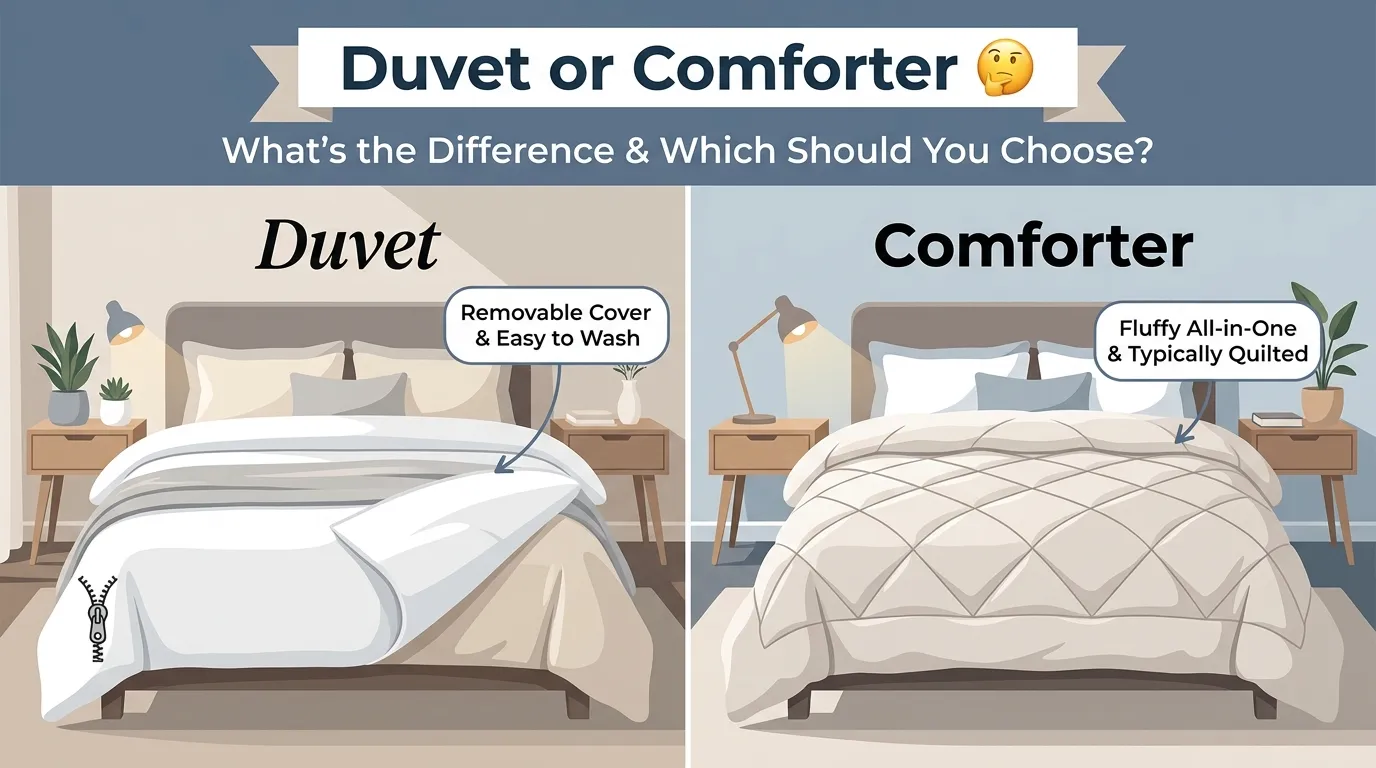
Duvet vs Comforter: A duvet is a plain insert used with a removable cover, while a comforter is a quilted blanket used on its own. 🛏️
When shopping for bedding, many people get confused between “duvet” and “comforter.” At first, they look the same both are soft, warm blankets used on beds. But they are not exactly the same.
This confusion leads many people to search for “duvet or comforter” to understand which one is better.
The problem usually comes from different terms used in different countries. In some places, people say “duvet,” while in others, “comforter” is more common. On top of that, they are designed differently and used in slightly different ways.
This article will clear up the confusion in a simple and easy way. You will learn what a duvet is, what a comforter is, and how they differ.
We will also explain their origins, usage in British and American English, and which one is right for you.
By the end, you will know exactly which option fits your needs and lifestyle.
Duvet or Comforter : Quick Answer
A duvet is a soft insert with a removable cover.
A comforter is a thick blanket with built-in cover.
Simple Explanation:
- Duvet = insert + cover (like a pillow and pillowcase)
- Comforter = one piece, ready to use
Examples:
- I use a duvet with a washable cover.
- She bought a comforter for her bed.
👉 Quick Rule:
- Want easy washing? Choose duvet
- Want convenience? Choose comforter
The Origin of Duvet or Comforter
Duvet:
The word “duvet” comes from French, meaning “down feathers.”
It was first used in Europe, especially in France and Scandinavia.
- Filled with feathers, wool, or synthetic fibers
- Used with a removable cover
Comforter:
The word “comforter” comes from English and means something that gives comfort.
- Popular in the United States
- One-piece bedding item
- No separate cover needed
Why the Confusion Exists:
- Same purpose (keep you warm)
- Different names in different regions
- Slight design differences
British English vs American English Spelling
This is where the main difference appears—not in spelling, but in usage.
Key Differences:
- 🇬🇧 UK/Commonwealth → Duvet is more common
- 🇺🇸 US → Comforter is more common
Comparison Table:
| Term | British English | American English | Meaning |
| Duvet | Very common | Less common | Insert with cover |
| Comforter | Less common | Very common | One-piece blanket |
👉 Both terms are correct but used differently by region.
Which Spelling Should You Use?
Your choice depends on your audience and location.
Use “Duvet” when:
- Writing for UK or Europe
- Talking about covers and inserts
- Shopping internationally
Use “Comforter” when:
- Writing for US audience
- Talking about ready-to-use bedding
- Buying in American stores
Audience-Based Advice:
- 🇺🇸 US → Use comforter
- 🇬🇧 UK/Commonwealth → Use duvet
- 🌍 Global → Use both with explanation
👉 Tip:
Mention both terms if your audience is international.
Common Mistakes with Duvet or Comforter
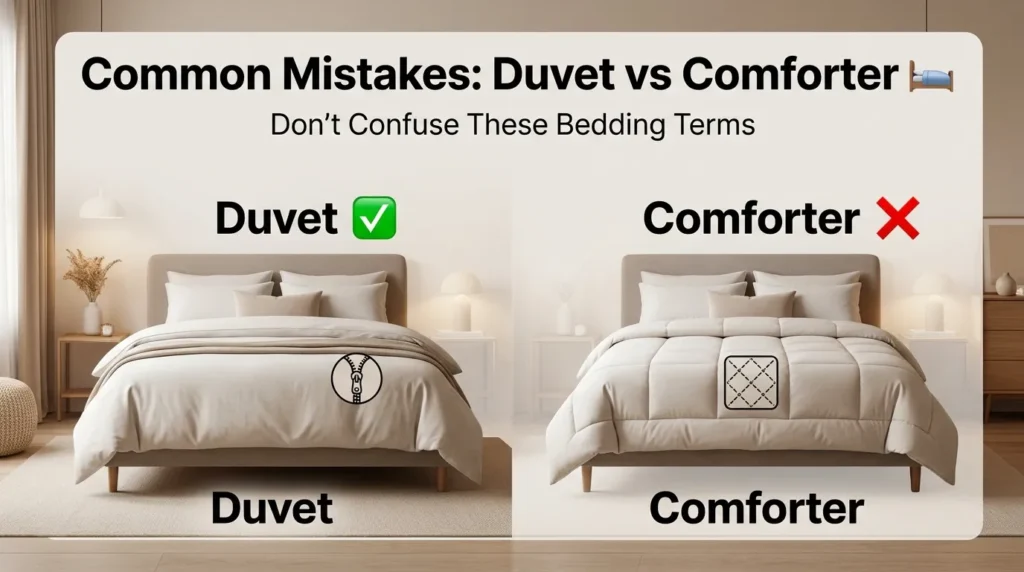
Here are common errors:
❌ Wrong vs ✅ Correct:
- ❌ Duvet and comforter are the same
✅ They are similar but not identical - ❌ A duvet has no cover
✅ A duvet always uses a cover - ❌ Comforters need covers
✅ They usually do not - ❌ Using wrong term for region
✅ Match term to audience
👉 Big Mistake:
Thinking both words mean exactly the same thing.
Duvet or Comforter in Everyday Examples
📧 Emails:
- Please bring a duvet cover for the guest room.
- We bought a new comforter set.
📰 News:
- Winter sales boost duvet demand in Europe.
- Comforters popular in US bedding market.
📱 Social Media:
- New cozy duvet 😍
- Love my fluffy comforter 🛏️
📝 Formal Writing:
- Duvets are widely used in European homes.
- Comforters are common in American households.
Duvet or Comforter : Google Trends & Usage Data
Search data shows clear regional patterns.
Popular Regions:
- 🇺🇸 United States → “comforter”
- 🇬🇧 United Kingdom → “duvet”
- 🇮🇳 India → both terms
- 🇵🇰 Pakistan → increasing use of both
Trends Insight:
- “Comforter” dominates in US searches
- “Duvet” dominates in Europe
Why People Search This:
- Buying bedding online
- Moving to another country
- Understanding product differences
👉 Usage Insight:
Global shoppers often search both terms together.
Comparison Table (Quick View)
| Feature | Duvet | Comforter |
| Structure | Insert + cover | One piece |
| Cleaning | Easy (wash cover) | Harder (wash whole item) |
| Usage Region | UK/Europe | USA |
| Style | Customizable | Fixed design |
| Convenience | Needs setup | Ready to use |
FAQs
1. Is a duvet the same as a comforter?
No. A duvet has a cover, while a comforter is one piece.
2. Which is better, duvet or comforter?
It depends. Duvets are easier to clean, comforters are easier to use.
3. Why do Americans say comforter?
Because that term is more common in the US.
4. Do duvets need covers?
Yes. A duvet always uses a cover.
5. Can I use a duvet without a cover?
Not recommended. It protects the duvet.
6. Which is more popular worldwide?
Both are popular, depending on region.
7. Which is easier to wash?
Duvets are easier because you only wash the cover.
Conclusion
The difference between duvet and comforter is simple once you understand their structure and usage. A duvet is a two-part system with an insert and a removable cover, making it easy to clean and customize. A comforter, on the other hand, is a single-piece blanket that is ready to use right away, making it more convenient.
The confusion often comes from regional differences. In the UK and Europe, “duvet” is the preferred term, while in the United States, “comforter” is more common. Despite this, both serve the same purpose: keeping you warm and comfortable while sleeping.
Choosing between them depends on your lifestyle. If you want easy cleaning and flexibility, go for a duvet. If you prefer simplicity and convenience, a comforter is a better choice.
👉 Final takeaway:
- Duvet = cover + insert
- Comforter = one piece
Understanding this difference will help you make better buying decisions and use the correct term confidently.
Read more about!
Theirself or Themself 🤔 Which Word Is Correct and When Should You Use It?