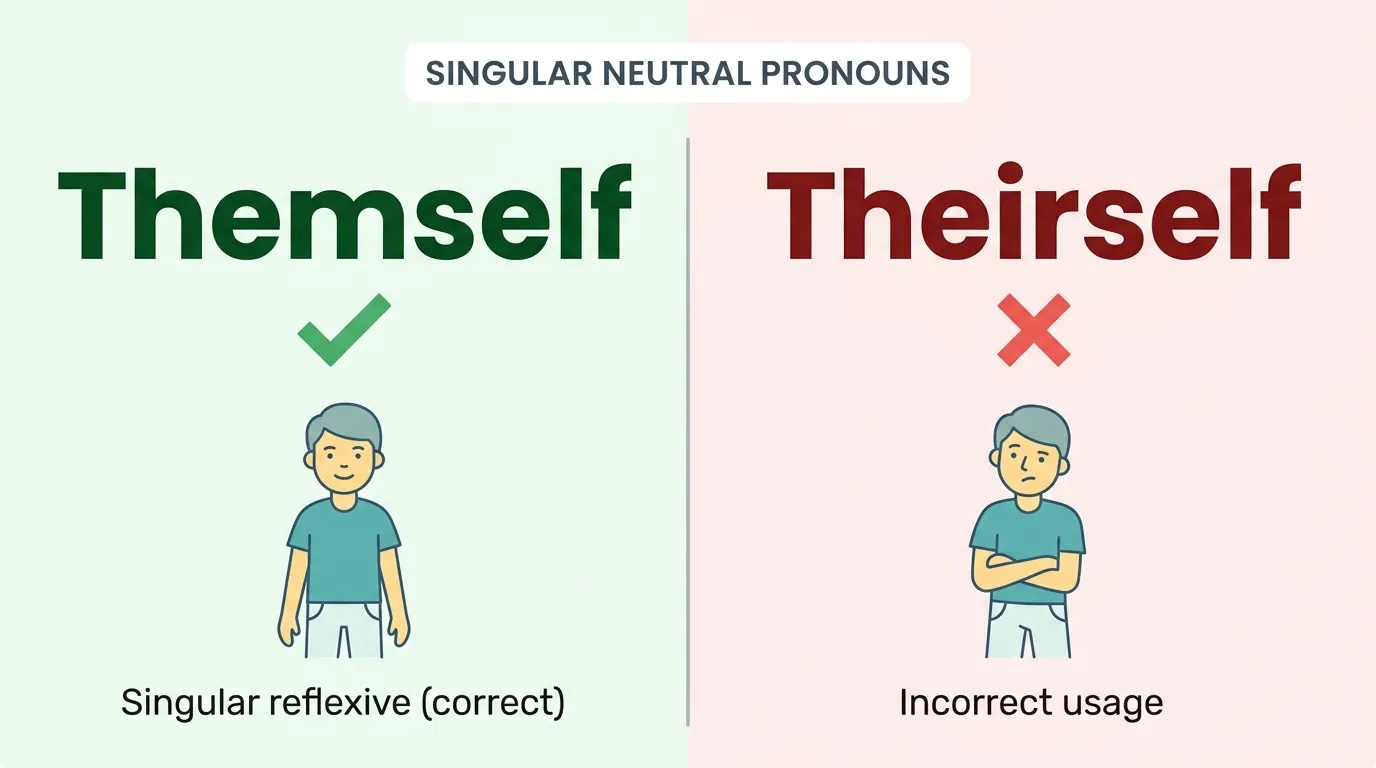
“Themself” is the correct reflexive form of singular “they,” while “theirself” is not standard English.
The confusion between “theirself or themself” is very common in English. Many people are unsure which word is correct. Both forms appear in speech and online writing, so it becomes hard to choose the right one.
This confusion is growing because English is changing, especially with the use of singular “they.”
People search for “theirself or themself” because they want to write clearly and correctly. This matters in emails, school assignments, professional writing, and social media.
A small grammar mistake can make your writing look less accurate or less professional. That is why understanding the correct form is important.
The problem comes from how reflexive pronouns work. Words like “himself” and “herself” are clear. But when we use “they” for one person, it creates confusion. Should it be “themself” or “theirself”?
In this article, you will learn the correct usage, origin, spelling differences, and common mistakes. By the end, you will know exactly which word to use and feel confident in your writing.
Theirself or Themself Quick Answer
- Themself ✅ = Correct (for singular “they”)
- Theirself ❌ = Non-standard / incorrect
👉 Examples:
✔ Each person should take care of themself.
❌ Each person should take care of theirself.
✔ If someone calls, tell them to help themself.
The Origin of Theirself or Themself
Themself
The word “themself” comes from combining “them” + “self.” It has been used for many years, especially when referring to a single person whose gender is unknown or not specified.
English has long used singular “they.” For example:
“If anyone calls, tell them I am busy.”
As this usage became more common, “themself” developed as a logical reflexive form.
Theirself
The word “theirself” also appears in English, but mostly in informal speech or regional dialects. It is not accepted in standard grammar rules.
Why confusion happens
- Singular “they” creates new grammar patterns
- People mix “their” with reflexive forms
- Informal speech influences writing
👉 Important: Standard English prefers “themself” or “themselves.”
British English vs American English Spelling
There is no major difference between British and American English in this case.
| Word | British English | American English | Status |
| Themself | Themself | Themself | ✔ Accepted |
| Theirself | Theirself | Theirself | ❌ Non-standard |
👉 Both UK and US prefer “themself” in modern usage.
Which Spelling Should You Use?
Use “themself” when:
- Referring to one person with “they”
- Writing in modern, inclusive English
- Writing professionally
Examples:
Each student should ask themself this question.
Someone should take care of themself.
Use “themselves” when:
- Referring to multiple people
Example:
The students prepared themselves.
Avoid “theirself” when:
- Writing anything formal
- Writing professionally
👉 Simple Tip:
- One person (they) → Themself
- Many people → Themselves
- Avoid → Theirself
Common Mistakes with Theirself or Themself
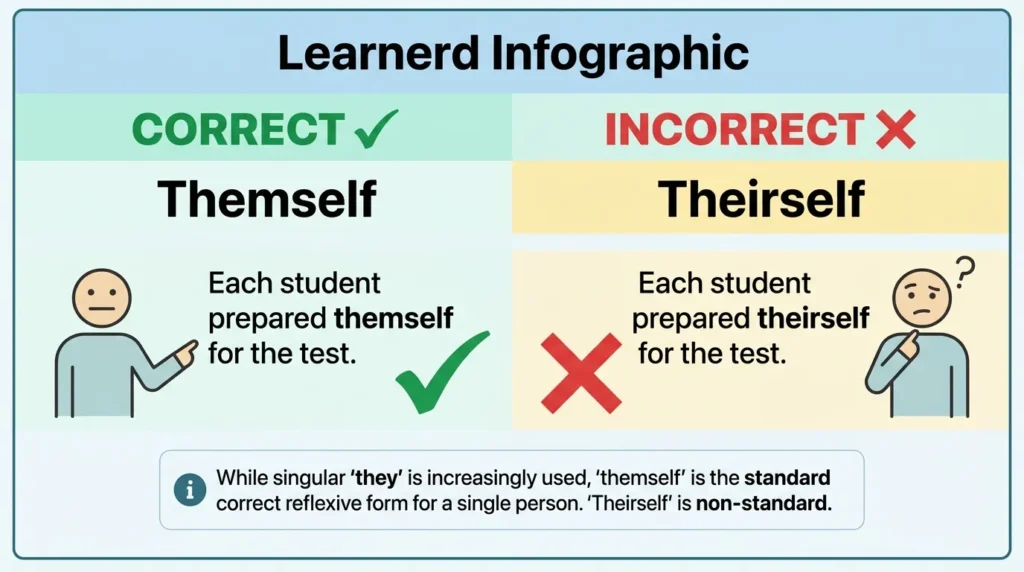
Mistake 1: Using “theirself” in formal writing
❌ Each person should help theirself
✔ Each person should help themself
Mistake 2: Mixing singular and plural
❌ Someone should help themselves (can be okay but less precise)
✔ Someone should help themself
Mistake 3: Avoiding singular “they”
Some people try to avoid it, but it is now widely accepted.
Mistake 4: Overthinking grammar
Keep it simple and follow modern usage.
Theirself or Themself in Everyday Examples
📧 Emails
Each employee should update themself on new policies.
📰 News
Every citizen must prepare themself for the change.
📱 Social Media
Everyone should believe in themself 💪
📊 Formal Writing
Each participant must register themself before the event.
Theirself or Themself Google Trends & Usage Data
Themself
- Increasing in popularity
- Used in modern and inclusive writing
Theirself
- Mostly searched due to confusion
- Rare in correct usage
Insight
Search trends show that people are unsure, but “themself” is becoming more accepted globally.
Comparison Table: Theirself vs Themself
| Feature | Themself | Theirself |
| Correctness | ✔ Standard | ❌ Non-standard |
| Usage | Formal & modern | Informal/dialect |
| Popularity | Growing | Low |
| Meaning | Reflexive (singular) | Intended reflexive |
| Example | Help themself | ❌ Help theirself |
FAQs
1. Is “theirself” ever correct?
No, it is considered non-standard in modern English.
2. Is “themself” correct?
Yes, it is correct for singular “they.”
3. Can I use “themselves” instead?
Yes, but it may sound less precise for one person.
4. Why is singular “they” used?
It is gender-neutral and widely accepted.
5. Is “themself” formal?
Yes, it is accepted in modern formal writing.
6. Do US and UK use different forms?
No, both use “themself.”
7. Which is best for exams?
Use “themself” or “themselves,” never “theirself.”
Conclusion
Understanding the difference between theirself or themself is important for clear and correct writing. The word “themself” is the correct and accepted form when using singular “they.” It is widely used in modern English, especially in inclusive and gender-neutral communication.
On the other hand, “theirself” is not considered standard. While it may appear in informal speech or regional dialects, it should be avoided in formal writing, academic work, and professional communication.
The key idea is simple. When you use “they” for one person, the correct reflexive form is “themself.” When you refer to more than one person, use “themselves.” This rule helps you stay clear and accurate in your writing.
Language continues to evolve, and singular “they” is now widely accepted around the world. Using the correct form shows that you understand modern English usage and care about clear communication.
Read more about!
Boriqua or Boricua 🤔 – What’s the Right Spelling and Meaning?

Hello, I am Henry P. Whitmore, an English language scholar and grammar author known for my contributions to English grammar education. I am recognized for presenting complex grammatical rules in a clear, structured, and student-friendly manner, making my work valuable for learners, teachers, and non-native speakers of English.