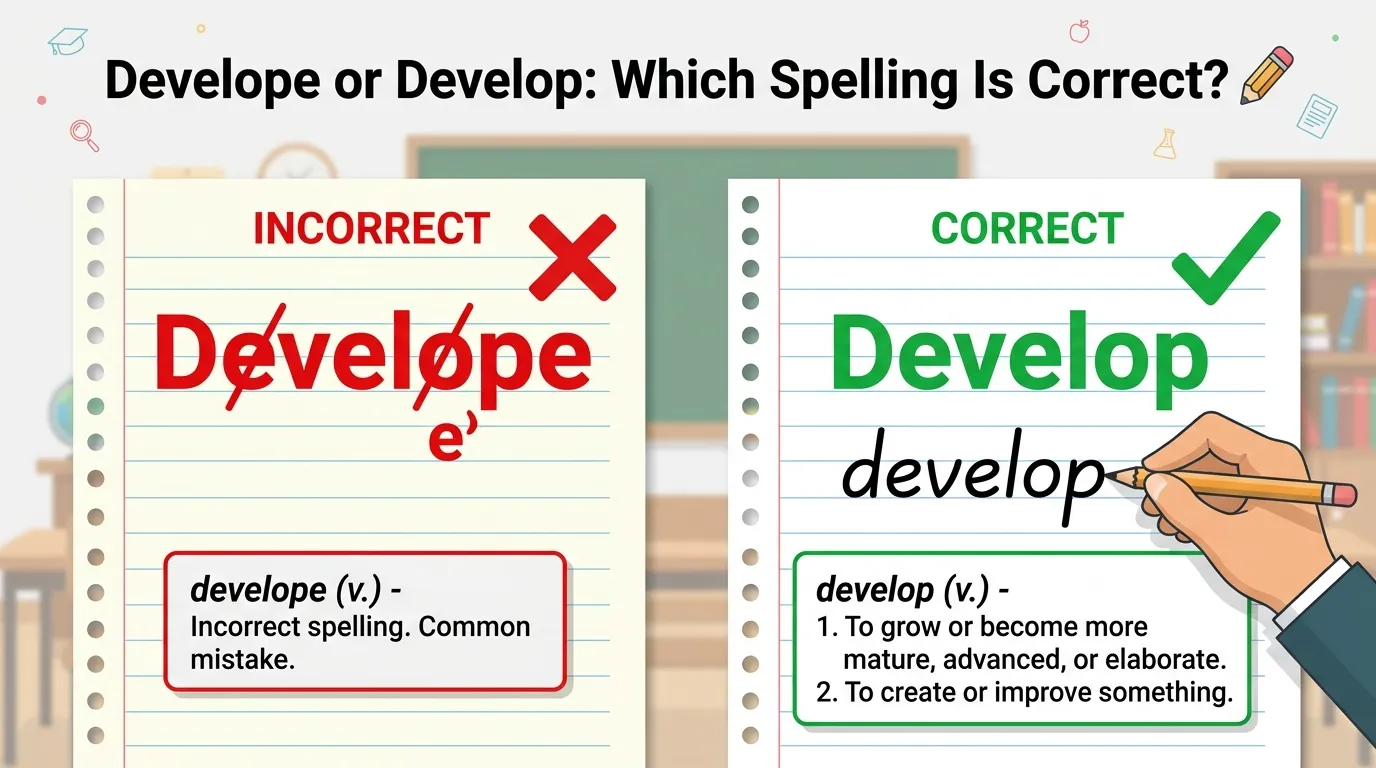
Develop is the correct spelling, while “develope” is a common misspelling in English.
Have you ever paused while typing “develope or develop”? This is one of the most common spelling confusions in English. Many people wonder If to add an extra “e” at the end or stick with the simpler form. Mistakes like this can reduce credibility in emails, articles, reports, and social media posts.
If you are a student, professional, or content creator, knowing the correct spelling is essential. This article clears up the confusion, explains the origin, compares British and American usage, and offers practical tips to always use the right form. By the end, you’ll confidently choose develop every time.
Develope or Develop : Quick Answer
The correct spelling is develop.
- ✅ Correct: She wants to develop her writing skills.
- ❌ Incorrect: She wants to develope her writing skills.
Tip: Always drop the extra “e.” It is not needed in modern English.
The Origin of Develope or Develop
Develop comes from the Old French word desveloper, meaning “unwrap” or “unfold.” Over time, English adopted it to mean “grow, improve, or advance.”
- Develop : Standard, correct form in modern English.
- Develope : Incorrect; likely influenced by French spelling but never standard in English.
So, the extra “e” in develope is historically unnecessary and considered a typo today.
British English vs American English Spelling
Unlike words such as colour vs color, develop is spelled the same in British and American English.
| Word | British English | American English | Correct Usage |
| Develop | develop | develop | ✅ Correct |
| Develope | ❌ Incorrect | ❌ Incorrect | ❌ Avoid |
No regional differences exist, making develop universally accepted.
Which Spelling Should You Use?
- US audience: Always develop.
- UK/Commonwealth: Always develop.
- Global writing: Stick to develop for consistency and professionalism.
Avoid develope in emails, blogs, academic papers, or business writing.
Common Mistakes with Develope or Develop
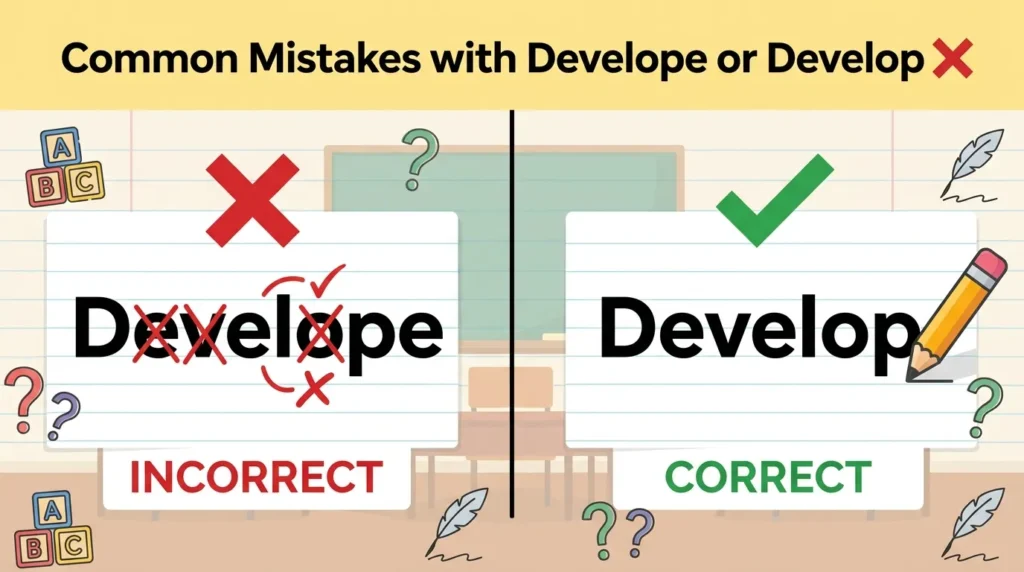
- Adding an unnecessary “e”: develope → Correct: develop.
- Confusing with similar words: developer, envelope.
- Using develope in formal writing → Always use develop.
Develope or Develop in Everyday Examples
- Email: I would like to develop a proposal for your review.
- News article: The company plans to develop new technologies.
- Social media: We are developing our app this month!
- Formal writing: Students develop critical thinking skills through exercises.
Develope or Develop : Google Trends & Usage Data
- Searches for develop far exceed develope worldwide.
- Top countries searching “develop”: USA, UK, India, Canada, Australia.
- “Develope” mostly appears in typo-related searches or beginner writing help queries.
| Keyword | Global Interest | Notes |
| Develop | 100 | Standard usage worldwide |
| Develope | 12 | Mostly spelling correction |
FAQs
1. Is “develope” ever correct?
No, it is always incorrect in modern English.
2. Can “develop” be used as a noun?
Yes, in some contexts: real estate development or a developer.
3. Is “developing” correct for continuous tense?
Yes: She is developing new skills.
4. Why do people write “develope”?
It may come from French influence or simple typos.
5. Does British English use “develope”?
No, both British and American English use develop.
6. How to remember the correct spelling?
Think: develop = grow or improve, no extra “e.”
7. Can “develop” appear in tech contexts?
Yes: develop an app, develop software, etc.
Conclusion
The choice is simple: always use develop. Develope is a frequent typo that reduces credibility. If writing emails, articles, social media posts, or academic papers, sticking to develop ensures professionalism and clarity. Understanding its origin and consistent spelling across English-speaking regions helps writers avoid mistakes. Remember, one extra “e” can make a big difference.
For global, US, or UK audiences, develop is the correct, standard form. By practicing correct usage, you can write confidently and maintain polished, professional content across every platform.
Read more about!
Pint or Quart 🥛 : What’s the Difference and Which One Should You Use?