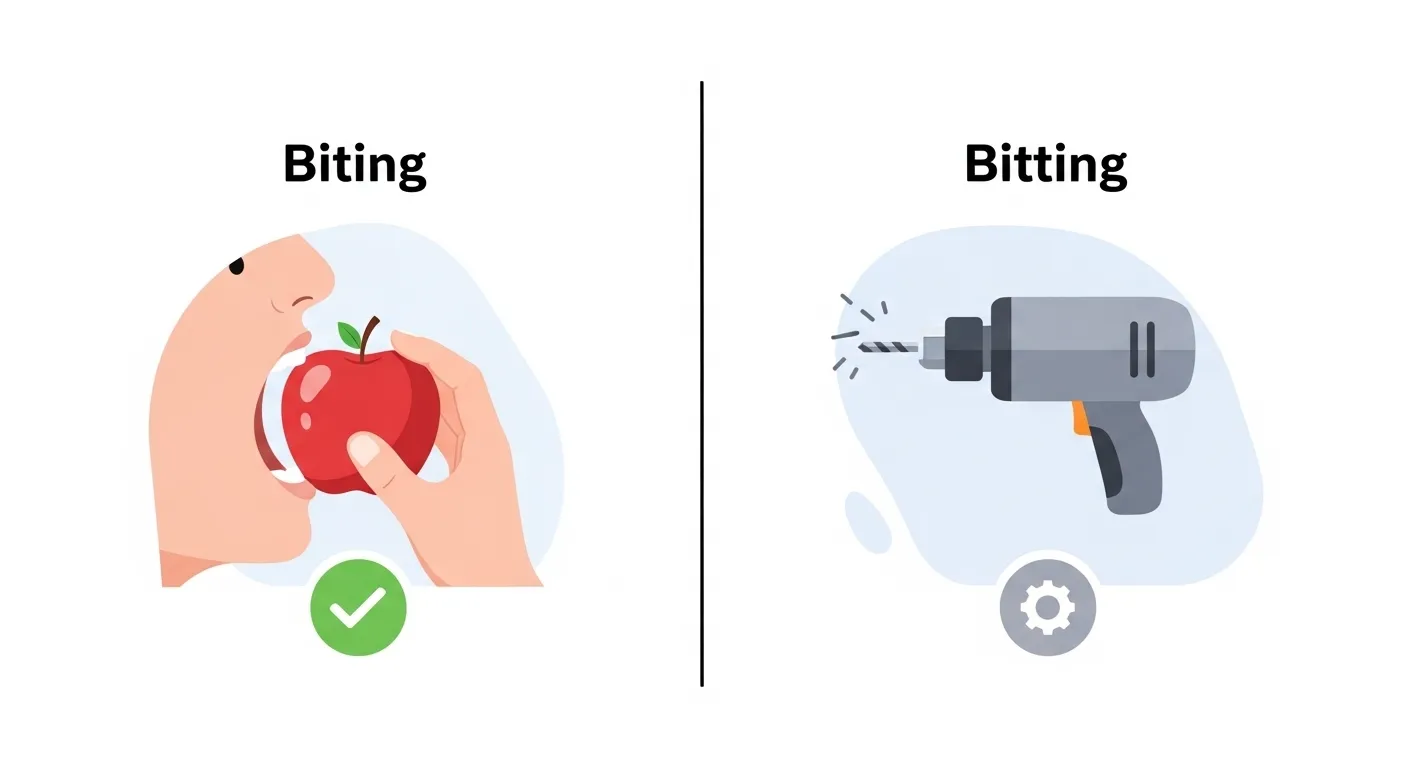
“Biting” is the correct spelling, while “bitting” is rare and only used in specific contexts like drilling or tools. 😊
Are you confused about whether to write bitting or biting? You’re not alone. Many people search for “bitting or biting” because these words look similar but only one is correct in standard English. Misusing them can create confusion in writing, especially in emails, social media posts, blogs, and academic content.
The confusion often arises because of the doubling of letters in English verbs. Some learners think that bitting is correct because other verbs double consonants, but in the case of bite, the correct present participle is biting.
Biting is the correct form for describing the act of using teeth to cut or grip. On the other hand, bitting exists in very specific contexts, such as horse riding, referring to a horse’s bit, but it is a niche term and not interchangeable with biting.
In this article, we will clarify the difference between bitting or biting, explain the origin of each word, cover British vs American English usage, highlight common mistakes, provide real world examples, and answer frequently asked questions. By the end, you’ll know exactly when and how to use the correct form.
Bitting or Biting – Quick Answer
- ✅ Biting = Correct standard English spelling for the present participle of bite.
- Example: The dog is biting the toy.
- ⚠️ Bitting = Specialized term used in horse riding to refer to equipment (horse bits).
- Example: The trainer adjusted the horse’s bitting for better control.
Rule of thumb: Use biting in everyday English. Only use bitting in equestrian contexts.
The Origin of Bitting or Biting
Bite / Biting
- Origin: Old English bītan, meaning “to bite, grasp with teeth”
- Present participle: biting
- Usage: Standard across English speaking regions for describing the act of biting
Bitting (Equestrian Term)
- Origin: From bit, referring to the metal mouthpiece in horse bridles
- Usage: Refers to the act of adjusting or fitting a bit for riding
- Rare outside horse riding communities
Why Confusion Exists
- Double consonants in English verbs (like hitting vs hiting) cause learners to misapply rules
- People assume bite should follow the same pattern (bitting), but it does not
- Bitting appears in niche contexts, so most writers encounter biting daily
British English vs American English Spelling
| Feature | British English | American English |
| Present participle of bite | Biting | Biting |
| Horse equipment term | Bitting | Bitting |
| Verb doubling rules | Follow standard English rules | Follow standard English rules |
| Usage frequency | Biting common, bitting rare | Same trend |
| Style preference | Biting in general writing | Biting in general writing |
✔️ Note: There is no spelling difference in biting. Bitting is a niche term used the same way in both regions.
Which Spelling Should You Use?
✅ Use Biting if:
- Describing the act of using teeth
- Writing for blogs, emails, social media, or academic papers
- Referring to animals, humans, or figurative expressions
👉 Example: She was biting her nails nervously.
✅ Use Bitting if:
- Writing for equestrian content
- Referring specifically to horse bits or training equipment
- Audience: riders, trainers, or equestrian professionals
👉 Example: The horse’s bitting was adjusted before the show.
Common Mistakes with Bitting or Biting
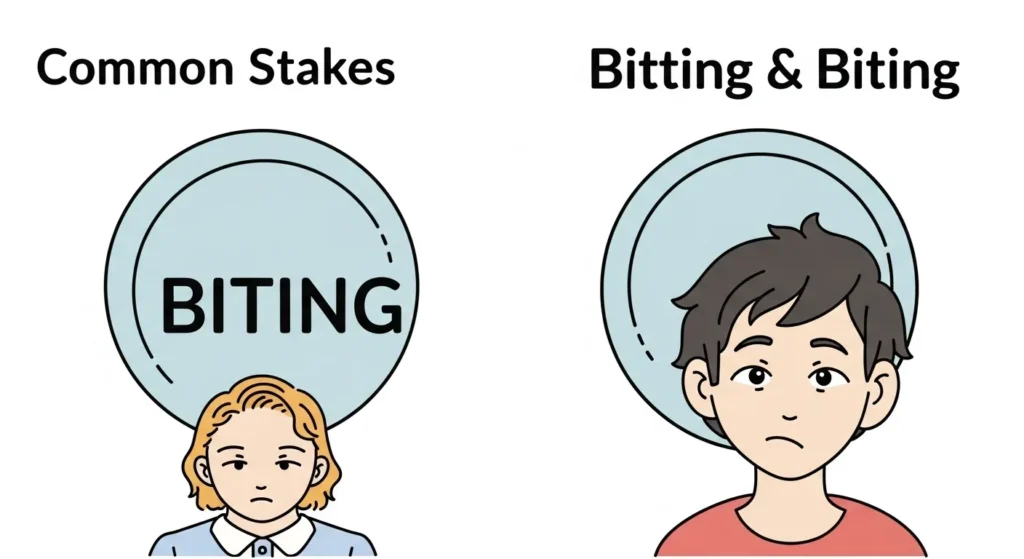
❌ Mistake 1: Writing bitting for regular biting
- Wrong: The dog is bitting the bone.
- Correct: The dog is biting the bone.
❌ Mistake 2: Confusing bitting with biting in figurative language
- Wrong: Her biting words hurt him. → Do not write bitting words
❌ Mistake 3: Overusing bitting outside horse contexts
- Only use bitting when referring to horse equipment
❌ Mistake 4: Misapplying doubling rules
- Some verbs double consonants incorrectly (bitting, cutted), but English rules vary depending on vowels and syllables
Bitting or Biting in Everyday Examples
Emails
- Correct: The dog is biting the cushion again.
- Incorrect: The dog is bitting the cushion.
News Headlines
- Shark Biting Incidents Rise in Coastal Areas
- Horse Bitting Adjustments Improve Rider Control
Social Media
- This cold weather is biting!
- Check the horse’s bitting before the competition.
Formal Writing
- The research observed birds biting seeds aggressively.
- Equestrian manuals explain proper bitting for safety.
Bitting or Biting – Google Trends & Usage Data
Search Trends
- Biting dominates searches in everyday English contexts
- Bitting has minimal search volume, mostly equestrian websites
Popularity by Region
- United States: Biting is common; bitting niche
- United Kingdom: Same trend
- Global: Biting widely used in English content; bitting almost exclusive to horse riding communities
Context Based Insight
- Writers, students, and bloggers need only biting
- Horse trainers or riders will occasionally need bitting
Comparison Table: Bitting vs Biting
| Feature | Biting | Bitting |
| Meaning | Using teeth to cut or grip | Refers to horse bit adjustment |
| Usage | General English, animals, figurative | Equestrian only |
| Audience | Everyone | Horse trainers, riders |
| Examples | The dog is biting the toy. | The horse’s bitting was adjusted. |
| Frequency | Very common | Rare |
FAQs
1. Is bitting ever correct?
Yes, only in horse riding contexts to refer to bits.
2. What is the correct present participle of bite?
It is biting.
3. Can I use bitting for dogs or humans?
No, use biting instead.
4. Are there spelling differences in UK vs US English?
No, biting is standard; bitting is niche in both regions.
5. Why do people write bitting?
They misapply doubling rules from other verbs like hitting.
6. Can bitting appear in figurative expressions?
No, always use biting.
7. How do I remember the difference?
Biting = teeth (general); Bitting = horse bit (niche).
Conclusion
When deciding between bitting or biting, most of the time, the correct choice is biting. This form applies to all general contexts, including humans, animals, and figurative expressions. Bitting is only correct in specialized equestrian contexts, referring to a horse’s bit or equipment.
Using the wrong form can confuse readers, especially in professional writing, social media posts, or academic assignments. By remembering that biting covers general situations and bitting is horse specific, you can write accurately and confidently.
Both British and American English use the same rules, so regional differences do not affect standard usage.
Proper usage ensures clarity, correctness, and professionalism in your writing. Whether describing a dog, a person, or a cold wind, always use biting. Reserve bitting exclusively for horse riding content to avoid mistakes.
Read more about!
Grimey or Grimy 🤔 – Which Spelling Is Correct?