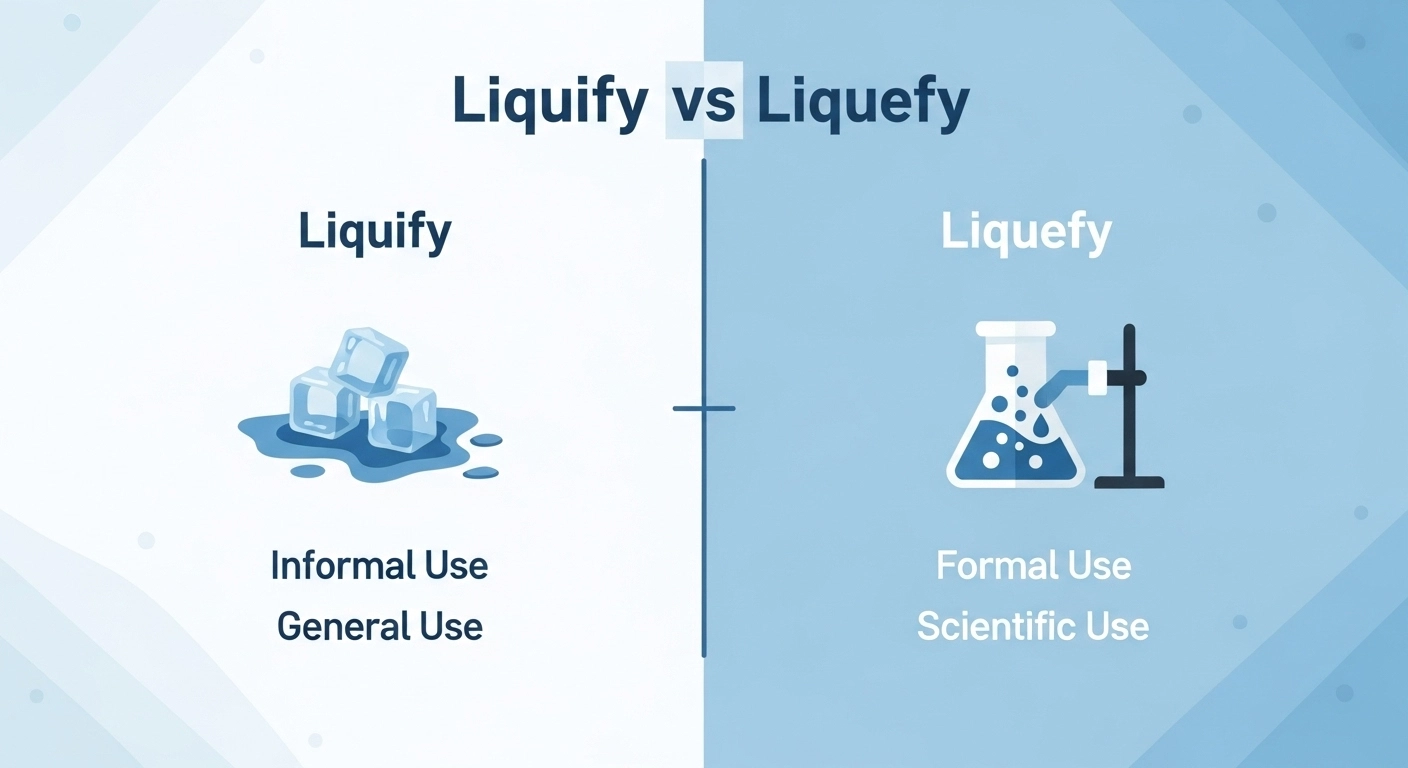
Both liquify and liquefy are correct, but liquefy is more formal and commonly used in scientific English.
Many people search for “liquify or liquefy” because both words appear correct and are often used in similar situations. You may see liquify assets in business articles and liquefy gas in science books.
Spellcheck tools sometimes accept both, which adds to the confusion. So which one is right? Are they the same word? Or does one work better in certain contexts?
The confusion exists because both words are real, but one is more traditional and widely accepted. Writers, students, and professionals want to know which spelling looks correct, sounds professional, and works best . Using the wrong form can make writing feel informal or less precise, especially in academic or technical content.
This article fully explains liquify or liquefy. You will get a quick answer, word origins, spelling rules, usage examples, common mistakes, and guidance on which word to use based on your audience. By the end, you will feel confident choosing the right word every time.
Liquify or Liquefy – Quick Answer
✅ Liquefy is the standard and preferred spelling
⚠️ Liquify is acceptable but less formal
Simple Meaning
Both words mean:
To change something into a liquid
Examples
- ✅ Heat can liquefy metal.
- ⚠️ The company plans to liquify assets. (informal but acceptable)
👉 Liquefy is safer for professional, academic, and global use.
The Origin of Liquify or Liquefy
Understanding word origins helps explain why both forms exist.
Origin of Liquefy
- From Latin liquefacere
- Liquere = to be liquid
- Facere = to make
- Literal meaning: to make liquid
Origin of Liquify
- Came later as a simplified English form
- Built from liquid + -ify
- Followed patterns like solidify and purify
Why Two Spellings Exist
English often allows:
- A Latin-based formal word
- A simplified English variant
Over time, liquefy stayed dominant, especially in science and formal writing.
Read more about:🕵️ Sneak or Sneek: Which Spelling Is Correct?
British English vs American English Spelling
This is not a British vs American spelling difference.
Key Rule
👉 Both British and American English prefer “liquefy”
Comparison Table
| English Type | Preferred | Acceptable |
| British English | Liquefy | Liquify |
| American English | Liquefy | Liquify |
| Scientific Writing | Liquefy | ❌ Avoid |
| Business Writing | Liquefy | ⚠️ Sometimes |
| Global English | Liquefy | ⚠️ Limited |
Which Spelling Should You Use?
Use Liquefy When:
- Writing formally
- Creating academic or scientific content
- Writing for global audiences
- Publishing articles
- Preparing reports or documentation
Examples
- Liquefied natural gas
- Metals liquefy at high heat
Use Liquify When:
- Writing informally
- Referring to finance or assets in casual business language
- Following company style guides that allow it
Example
- The firm plans to liquify holdings.
Audience-Based Advice
- US audience: Liquefy (best)
- UK/Commonwealth: Liquefy
- Global : Liquefy only
Common Mistakes with Liquify or Liquefy
1. Thinking Liquify Is More Modern
❌ Liquify is newer and better
✅ Liquefy is still the standard
2. Using Liquify in Science
❌ The gas will liquify
✅ The gas will liquefy
3. Mixing Forms in One Text
❌ Liquify in one sentence, liquefy in another
✅ Pick one: liquefy
Easy Memory Tip
👉 Science = liquefy
👉 Formal writing = liquefy
Liquify or Liquefy in Everyday Examples
Emails
- ✅ Heat will liquefy the material.
- ⚠️ We may liquify some assets this year.
News Writing
- ✅ The gas is stored in liquefied form.
- ❌ The gas is stored in liquified form.
Social Media
- ⚠️ Planning to liquify my investments 💰
- ✅ Watching metal liquefy under heat 🔥
Formal Writing
- ✅ The substance begins to liquefy at 120°C.
- ❌ The substance begins to liquify at 120°C.
Liquify or Liquefy – Google Trends & Usage Data

Search engines show consistent interest in “liquify or liquefy”.
Why People Search This
- Both spellings appear in dictionaries
- Spellcheck allows both
- Confusion in finance vs science contexts
Usage Insights
- Liquefy dominates academic papers, textbooks, and technical websites
- Liquify appears mostly in informal business writing
- tools favor liquefy
For ranking and clarity, liquefy performs better.
Liquify vs Liquefy – Comparison Table
| Feature | Liquefy | Liquify |
| Correct word | ✅ Yes | ✅ Yes |
| Preferred usage | ✅ Yes | ❌ No |
| Formal writing | ✅ Best | ⚠️ Weak |
| Scientific use | ✅ Standard | ❌ Avoid |
| Business casual | ⚠️ OK | ✅ Common |
| friendly | ✅ Yes | ❌ No |
FAQs
1. Are liquify and liquefy the same?
Yes, they mean the same thing.
2. Which is more correct?
Liquefy.
3. Is liquify wrong?
No, but it is less formal.
4. Which spelling do scientists use?
Liquefy.
5. Is liquify American English?
No. Both forms exist in US and UK English.
6. Which spelling should I use ?
Liquefy.
7. What is liquefied gas?
Gas that has been turned into liquid form.
Conclusion
The confusion between liquify or liquefy is understandable because both words are real and mean the same thing. However, liquefy is the clearer, older, and more widely accepted spelling. It is preferred in science, education and formal writing.
Liquify still appears in informal business language, especially when talking about assets or finances. While it is not wrong, it can sound less professional and may reduce clarity in technical contexts.
If you want your writing to be accurate, professional, and globally understood, choose liquefy. When in doubt, remember this rule: formal and scientific writing always favors liquefy.