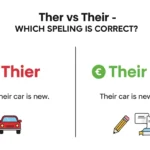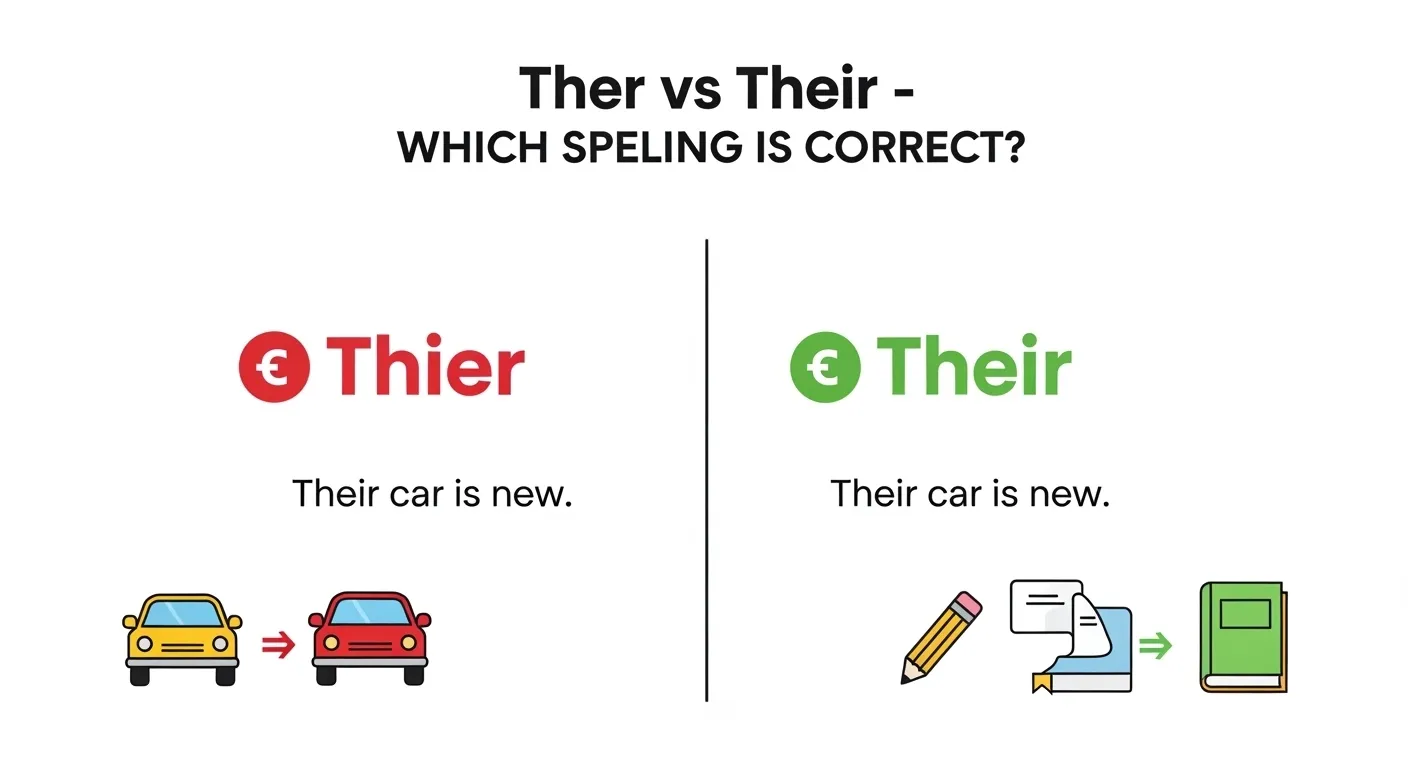
“Their” is correct for showing possession, while “Thier” is a common misspelling. ✏️✅
English spelling can sometimes be tricky. One common mistake many writers make is confusing “thier” and “their.”
You may have seen both versions online, in social media posts, emails, or even in student essays. Because they look very similar, many people wonder which one is correct.
People often search for “thier or their” because they want to improve their grammar and avoid spelling mistakes.
This confusion usually happens when typing quickly or when someone is unsure about the correct spelling rule. The truth is simple: one spelling is correct, and the other is just a common mistake.
Understanding this difference is important because spelling errors can affect the clarity and professionalism of your writing
If you are writing a school assignment, a business email, or a blog post, using the correct spelling helps your message look more polished and trustworthy.
In this guide, you will learn the quick answer, the history of the word, common mistakes, real-life examples, and usage trends.
By the end of this article, you will clearly understand why “their” is correct and why “thier” should always be avoided.
Thier or Their ; Quick Answer
The quick answer is very simple:
✅ Their is the correct spelling.
❌ Thier is a spelling mistake.
“Their” is a possessive determiner. It shows that something belongs to a group of people.
Examples
Correct:
- The students finished their homework.
- The team celebrated their victory.
- The children forgot their bags at school.
Incorrect:
- The students finished thier homework.
- The team celebrated thier victory.
So remember this rule:
Always use “their.” Never use “thier.”
The Origin of Thier or Their
To understand why “their” exists, we need to look at the history of the English language.
The word “their” comes from Old Norse, a language spoken by Scandinavian people many centuries ago. It developed from the word “þeira,” which meant “belonging to them.”
When Norse languages influenced English during the Viking period, many words entered the English language. Words like:
- they
- them
- their
all came from Old Norse roots.
Over time, these words became standard parts of English grammar.
The spelling “thier” never existed as a real English word. It appeared only because of typing errors or confusion with the “i before e” spelling rule.
So historically speaking:
| Word | Origin | Status |
| Their | Old Norse “þeira” | Correct word |
| Thier | No historical origin | Spelling mistake |
British English vs American English Spelling
Sometimes English spelling differs between British English and American English. For example:
| American English | British English |
| color | colour |
| center | centre |
| favorite | favourite |
However, “their” is the same in both versions of English.
There is no spelling difference between British and American English in this case.
Comparison Table
| Feature | Their | Thier |
| Correct spelling | Yes | No |
| American English | Correct | Incorrect |
| British English | Correct | Incorrect |
| Used in formal writing | Yes | No |
| Dictionary word | Yes | No |
This means their is the only correct spelling worldwide.
Which Spelling Should You Use?
The answer is simple.
You should always use “their.”
It does not matter if your audience is:
- American
- British
- Australian
- Canadian
- Global readers
The correct spelling remains the same everywhere.
Example for Different Audiences
American writing:
- The players showed their skills.
British writing:
- The players showed their skills.
Global writing:
- Companies must protect their data.
In every case, their is the correct and accepted spelling.
Common Mistakes with Thier or Their

Even though the rule is simple, many writers still make mistakes.
Let’s look at the most common ones.
1. Typing Error
Many people accidentally type “thier” because they type quickly.
Incorrect:
- The students forgot thier books.
Correct:
- The students forgot their books.
2. Confusing Spelling Rules
Some learners remember the rule “i before e except after c.”
Because of this, they mistakenly write thier.
But English has many exceptions, so the correct spelling remains their.
3. Confusing “Their” with “There” and “They’re”
Another common mistake is mixing similar-sounding words.
| Word | Meaning | Example |
| Their | Shows possession | Their house is big |
| There | Refers to a place | The book is over there |
| They’re | Short for “they are” | They’re happy today |
Example:
Correct:
- Their car is new.
- The car is over there.
- They’re going home.
4. Auto-Correct Problems
Sometimes spelling mistakes happen because of:
- mobile keyboards
- fast typing
- weak grammar checking
Always proofread your writing before sending it.
Thier or Their in Everyday Examples
Let’s see how their is used in real-life communication.
Emails
- Please submit their reports by Monday.
- The employees updated their schedules.
News Writing
- The players celebrated their championship win.
- Citizens shared their opinions on the issue.
Social Media
- People love sharing their travel photos.
- Everyone posted their favorite memories.
Formal Writing
- Researchers published their findings in a journal.
- Students must complete their assignments on time.
In every example, their shows possession.
Thier or Their ; Google Trends & Usage Data
When analyzing online searches and writing data, it is clear that “their” dominates global usage.
Usage Patterns
| Word | Search Intent | Usage Level |
| Their | Correct grammar usage | Extremely high |
| Thier | Spelling mistake search | High but incorrect |
People often search “thier or their” because they want to confirm the correct spelling.
Regional Trends
| Country | Common Usage |
| United States | Their |
| United Kingdom | Their |
| Canada | Their |
| Australia | Their |
| Global internet content | Their |
The word “thier” appears mostly in spelling error searches, not in proper writing.
Comparison Table: Thier vs Their
| Feature | Their | Thier |
| Correct spelling | Yes | No |
| Dictionary word | Yes | No |
| Shows possession | Yes | No |
| Used in academic writing | Yes | Never |
| Appears in grammar guides | Yes | Only as an error |
This table clearly shows that their is the only correct form.
FAQs ;
1. Is “thier” ever correct?
No. “Thier” is always a spelling mistake.
2. Why do people write “thier”?
People often write it because of typing errors or confusion with spelling rules.
3. What does “their” mean?
Their shows possession. It means something belongs to them.
Example:
- The students brought their laptops.
4. Is “their” used in both British and American English?
Yes. Their is the correct spelling in all forms of English.
5. How can I remember the correct spelling?
Remember this simple trick:
“Their” contains the word “heir,” meaning someone who owns something.
So their = possession.
6. Is “their” formal or informal?
It is used in both formal and informal writing.
7. Can “their” be used for singular people?
Yes. In modern English, singular “they” and “their” are often used when gender is unknown.
Example:
- Someone forgot their phone.
Conclusion
The difference between thier and their is simple but very important for clear writing. Many people accidentally type “thier” because of spelling confusion or fast typing. However, the truth is that “thier” is never correct in English.
The correct spelling is always “their.” It is a possessive determiner used to show that something belongs to a group of people. For example, in sentences like “The students finished their homework” or “The players celebrated their victory,” the word clearly shows ownership.
Unlike many English spelling differences, there is no variation between British and American English in this case.
Both versions of English use “their” exactly the same way. That makes it easy to remember the rule.
To avoid mistakes, writers should proofread their work carefully and remember the simple rule: “their” shows possession, while “thier” is only a typing error.
By mastering this small but important detail, you can improve your grammar, write more professionally, and communicate your ideas with greater confidence.
Read more about ;
Borrow or Barrow: How to Use the Right Word 📝🚜

My name is Noam Chomsky. I am a linguist, philosopher, and political thinker. I am best known for my work in English grammar and linguistics, especially for developing generative grammar.I studied at the University of Pennsylvania, where I earned my PhD in linguistics. Later, I joined the Massachusetts Institute of Technology (MIT) and taught there for many years. My book “Syntactic Structures” changed the way people understand language and grammar.