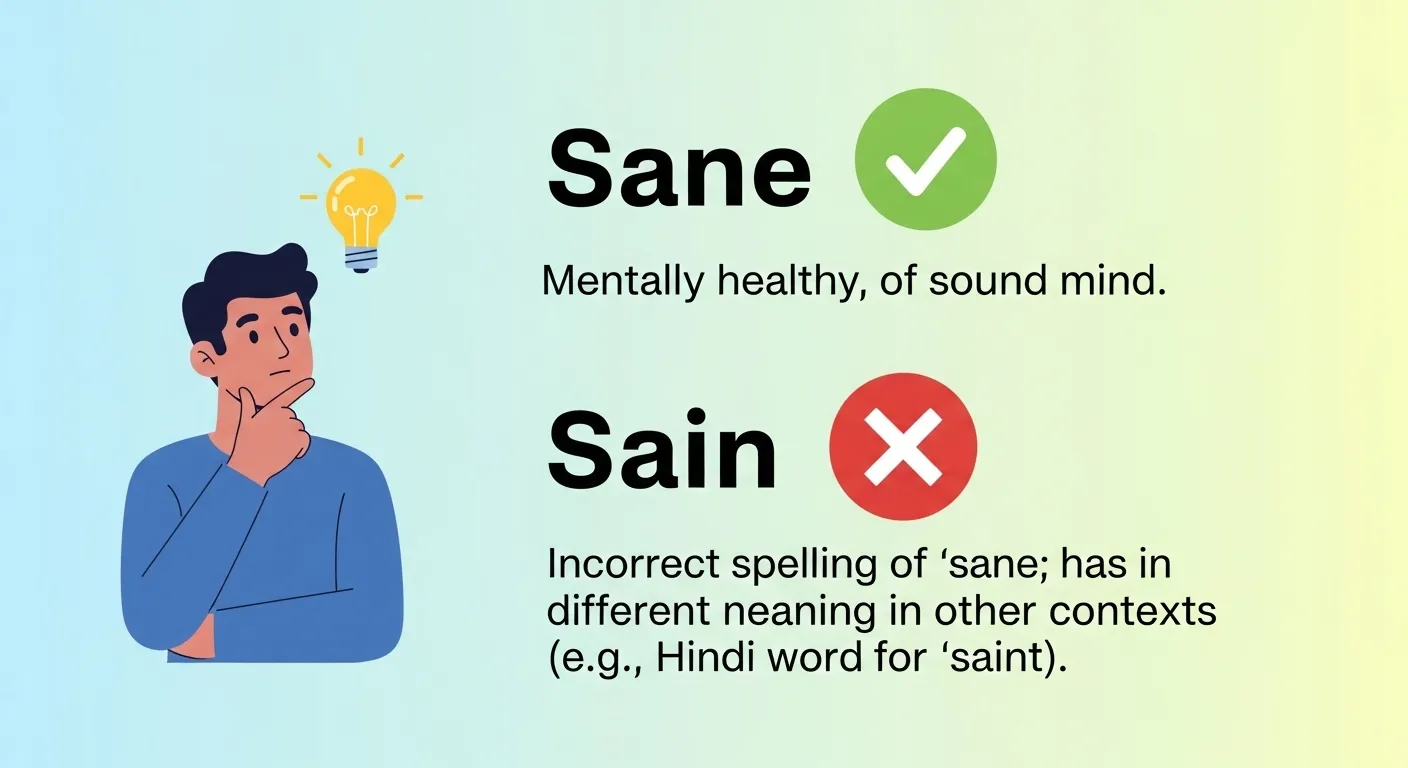
The correct spelling for mental soundness is Sane; Sain is incorrect in this context.
Many people get confused when they see the words sane or sain. They look similar. They sound similar. But only one of them is commonly correct in modern English. This confusion is why people search for this keyword again and again.
You may see sane in books, emails, or news articles. Then you might see sain in poetry, old texts, or names. Some learners think sain is a British spelling of sane.
Others believe it is an alternative or older form. This leads to spelling mistakes in exams, blogs, and professional writing.
The confusion matters because using the wrong spelling can change meaning or make your writing look incorrect.
English has many words that sound alike but do not mean the same thing. Sane or sain is one of them.
This article clears everything up. You will get a quick answer, understand the origin, learn the correct spelling rules, avoid common mistakes, and see real life examples. By the end, you will confidently know when to use sane and when sain is appropriate.
Sane or Sain ; Quick Answer
Sane is the correct and common word in modern English.
Sain is rare and has a completely different meaning.
- Sane → mentally healthy, reasonable
- Sain → to bless or make sacred (old or literary use)
Examples:
- She is perfectly sane.
- He tried to sain the land in the old poem.
The Origin of Sane or Sain
Origin of “Sane”
- Comes from Latin sanus
- Meaning: healthy, sound, whole
- Entered English in the 17th century
- Used to describe mental health and clear thinking
Over time, sane became the standard word for describing someone who is mentally stable or thinking clearly.
Origin of “Sain”
- Comes from Old English “sāgnian”
- Meaning: to bless, consecrate, or make holy
- Common in religious and poetic texts
- Rare in modern everyday English
This difference exists because sain did not evolve into a common modern word, while sane did.
British English vs American English Spelling
This is a very important point:
👉 Sane is spelled the same in British and American English
👉 Sain is NOT a spelling variant of sane
Comparison Table
| Language Type | Correct Form | Example |
| American English | Sane | A sane decision |
| British English | Sane | A sane person |
| Old / Literary English | Sain | To sain the church |
| Modern writing | Sane | Stay sane |
✅ There is no US vs UK spelling difference here.
Which Spelling Should You Use?
Use “Sane” if your audience is:
- Students
- Bloggers
- Professionals
- General readers
- Social media users
Example:
“I’m trying to stay sane during exams.”
Use “Sain” only if:
- Writing poetry
- Translating old texts
- Writing religious or historical content
- Using symbolic language
Example:
“The priest would sain the ground before battle.”
Global Advice
If you are unsure:
👉 Always use “sane.”
It is correct 99% of the time.
Common Mistakes with Sane or Sain
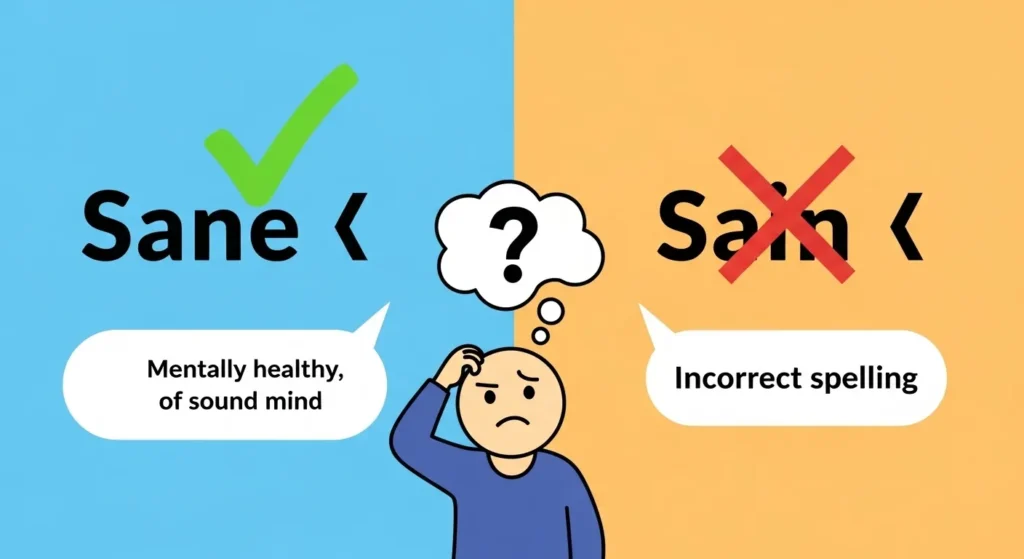
❌ Writing sain instead of sane
✅ Use sane in modern English
❌ Thinking sain is British spelling
✅ It is not
❌ Using sain in emails or essays
✅ This looks incorrect
❌ Mixing both words
✅ Choose based on meaning
❌ Assuming sain means mentally healthy
✅ It does not
Sane or Sain in Everyday Examples
Emails
“Please stay sane during the busy week.”
News
“Experts urge people to remain sane in stressful times.”
Social Media
“Trying to stay sane after five cups of coffee 😅”
Formal Writing
“The patient was declared sane by the court.”
Sane or Sain ; Google Trends & Usage Data
Sane
- Very high global search volume
- Used in:
- Mental health
- Law
- Daily conversation
- Media
- Mental health
Sain
- Extremely low search volume
- Found mainly in:
- Literature
- Poetry
- Religious texts
- Literature
By Country
- US, UK, Canada, Australia → Sane dominates
- Academic or historical searches → Sain appears rarely
This confirms that sane is the word people actually use today.
Sane vs Sain ; Side by Side Comparison Table
| Feature | Sane | Sain |
| Common usage | Very common | Very rare |
| Meaning | Mentally healthy | To bless |
| Modern English | Yes | No |
| US & UK spelling | Same | Same |
| Daily writing | ✅ | ❌ |
| Literary use | ❌ | ✅ |
FAQs ;
1. Is sain a misspelling of sane?
No. It is a real word, but very rare.
2. Can I use sain instead of sane?
No. They have different meanings.
3. Which spelling is correct in exams?
Always use sane.
4. Is sain used in British English today?
Almost never.
5. What does sain mean exactly?
It means to bless or make sacred.
6. Why do people confuse sane and sain?
Because they sound similar.
7. Which word should I use for writing?
Use sane.
Conclusion
The confusion between sane or sain is understandable, but the answer is simple. Sane is the correct, modern, and widely accepted word.
It means mentally healthy, reasonable, or clear thinking. You will see it in everyday speech, news, emails, exams, and professional writing.
Sain, on the other hand, is an old and rare word. It appears mainly in poetry, religious texts, or historical writing. It does not mean mentally healthy and should not be used in normal conversation or modern articles.
If your goal is clear communication, professional writing, or content, sane is always the right choice. Use sain only when you truly mean to bless and are writing in a historical or literary style.
Read more about !

Hello, I am Henry P. Whitmore, an English language scholar and grammar author known for my contributions to English grammar education. I am recognized for presenting complex grammatical rules in a clear, structured, and student-friendly manner, making my work valuable for learners, teachers, and non-native speakers of English.