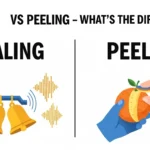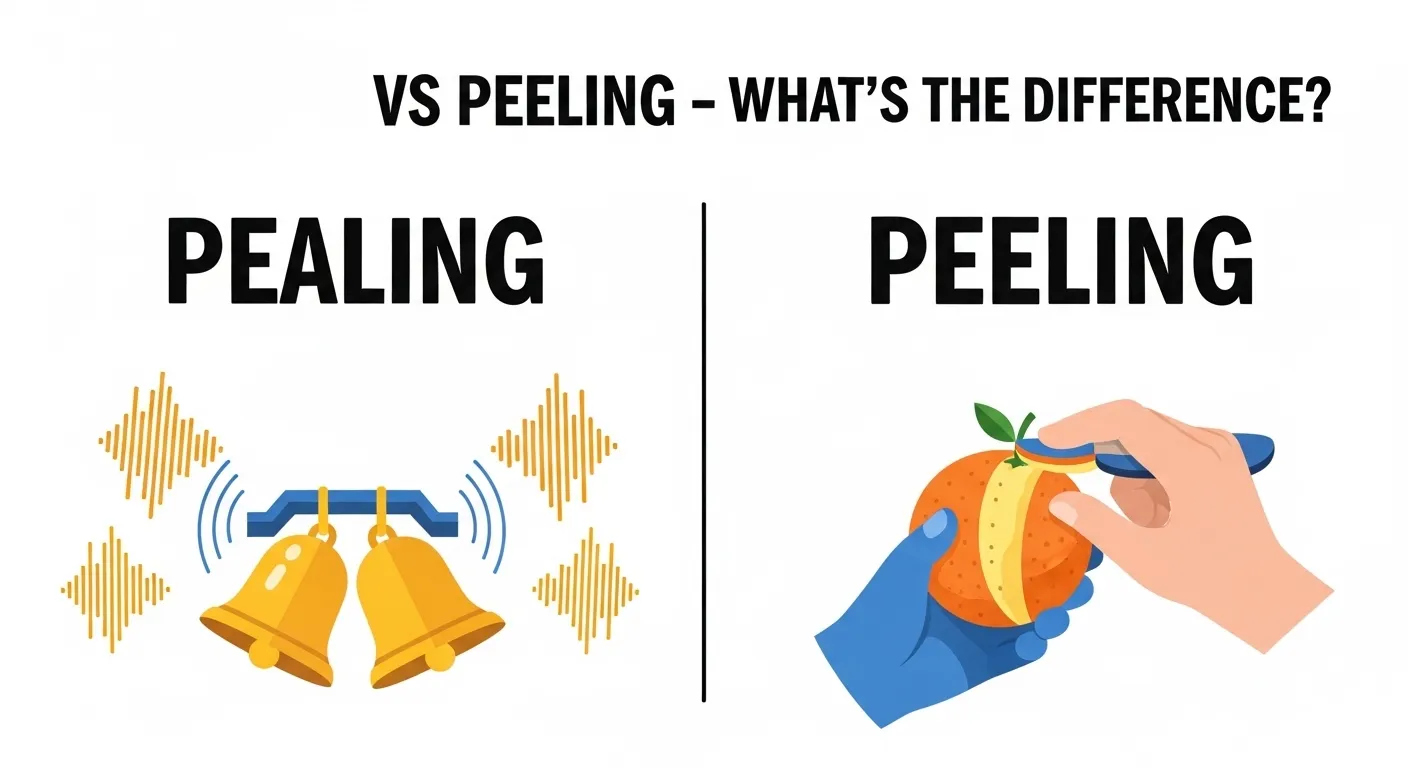
Peeling” means removing the skin from fruit or vegetables, while “pealing” refers to a loud ringing sound like bells. 🍊🔔📚
English spelling can be confusing, especially when two words look almost the same but have very different meanings.
One common example is “pealing” or “peeling.” Many writers and students search for this phrase online because they are not sure which word is correct.
At first glance, both words appear similar. They share the same pronunciation in many accents and differ by only one letter.
However, they are not interchangeable. Each word has its own meaning and is used in completely different contexts.
For example, “peeling” is usually used when talking about removing a layer from something, like peeling an orange or peeling paint from a wall. “Pealing,” on the other hand, is often used when referring to the loud ringing of bells.
Because these words sound alike, people often mix them up when writing emails, blog posts, or school assignments.
Understanding the difference will help you avoid mistakes and improve your grammar.
In this guide, you will learn the quick answer, word origins, common mistakes, real-life examples, and usage trends.
By the end, you will clearly know when to use pealing and when to use peeling.
Pealing or Peeling ; Quick Answer
The quick answer is simple: both “pealing” and “peeling” are correct words, but they have different meanings.
- Peeling means removing a layer or skin from something.
- Pealing means the loud ringing or echoing sound of bells or laughter.
Examples
Using peeling:
- She is peeling an apple for the pie.
- The paint on the wall is peeling.
Using pealing:
- The church bells were pealing across the town.
- Laughter was pealing through the hall.
So the difference is based on meaning and context, not spelling rules.
The Origin of Pealing or Peeling
The words pealing and peeling come from two different historical roots.
Origin of “Peeling”
The word peel comes from Old French “peler”, which means to remove skin or outer covering. This word entered English during the Middle Ages.
Over time, it became commonly used for actions like:
- peeling fruit
- peeling vegetables
- peeling paint
- peeling skin after sunburn
The present participle form is peeling.
Origin of “Pealing”
The word peal has a different origin. It comes from the Middle English word “pele”, which referred to a loud ringing sound, especially from bells.
It is commonly used when describing:
- church bells ringing loudly
- echoes of laughter
- loud musical sounds
The present participle form of peal is pealing.
British English vs American English Spelling
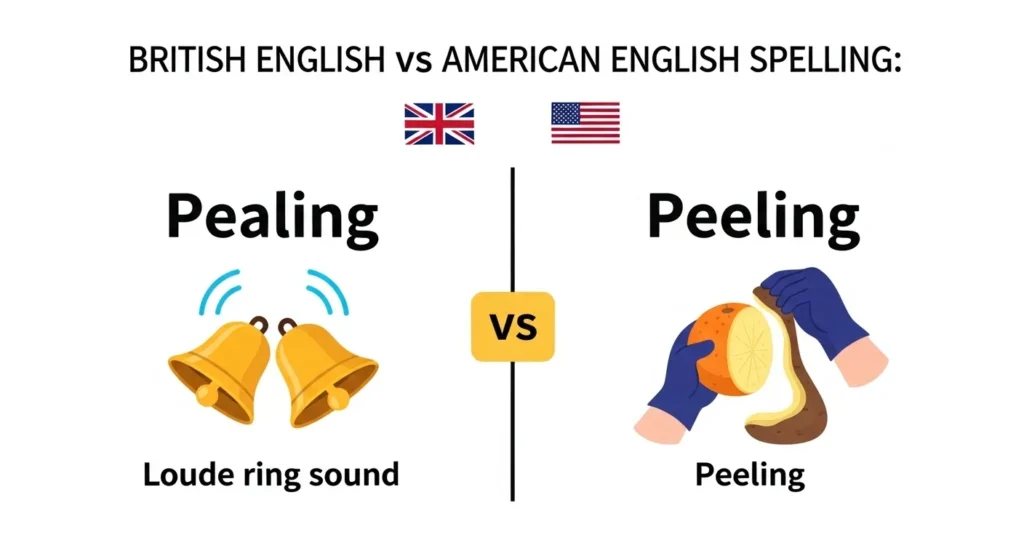
Unlike many English words, pealing and peeling are spelled the same in both British and American English. The difference is not related to region but to meaning.
Example
American English:
- She is peeling potatoes for dinner.
British English:
- She is peeling potatoes for dinner.
Example with sound:
American English:
- Bells were pealing in celebration.
British English:
- Bells were pealing across the village.
Comparison Table
| Word | Meaning | Usage |
| Peeling | Removing outer layer | Cooking, paint, skin |
| Pealing | Loud ringing sound | Bells, laughter |
Both countries use the same spelling and meanings.
Which Spelling Should You Use?
Choosing between pealing and peeling depends entirely on the context of your sentence.
Use “Peeling” When Talking About Removing Layers
Examples:
- He is peeling an orange.
- The wallpaper is peeling from the wall.
- Her skin is peeling after the sunburn.
This is the more common word in everyday conversation.
Use “Pealing” When Talking About Loud Ringing Sounds
Examples:
- The bells were pealing at the wedding.
- Laughter was pealing through the room.
This word appears more often in literature, storytelling, or formal writing.
Advice for Global Writing
If you are writing for a global audience:
- Use peeling for actions involving skin or layers.
- Use pealing only when referring to sounds like bells.
Common Mistakes with Pealing or Peeling
Because the words sound alike, many people mix them up.
Here are the most common mistakes.
Mistake 1: Using “Pealing” for Food
Incorrect:
- She is pealing the banana.
Correct:
- She is peeling the banana.
Mistake 2: Using “Peeling” for Bell Sounds
Incorrect:
- The church bells were peeling.
Correct:
- The church bells were pealing.
Mistake 3: Assuming One Word Is Incorrect
Some people think one word is wrong. In reality, both are correct, but they describe different things.
Mistake 4: Ignoring Context
Always check the meaning of the sentence before choosing the spelling.
Pealing or Peeling in Everyday Examples
These words appear in many real-life situations.
Emails
- The paint on the office wall is peeling.
- We could hear bells pealing during the ceremony.
News
- The building’s old paint is peeling due to weather damage.
- Church bells were pealing during the national celebration.
Social Media
- I’m peeling potatoes for dinner tonight.
- Wedding bells were pealing all afternoon.
Formal Writing
- The walls showed signs of peeling paint.
- The cathedral bells were pealing loudly across the city.
Pealing or Peeling ; Google Trends & Usage Data
Online search data shows that “peeling” is searched far more often than “pealing.”
This is because peeling is used in everyday activities like:
- cooking
- skincare
- painting
Search Popularity
| Word | Search Volume |
| Peeling | Very high |
| Pealing | Much lower |
Common Search Queries
People often search for:
- peeling skin
- peeling paint
- peeling vegetables
While pealing is usually searched in literary or educational contexts.
Popular Regions
| Country | Common Search |
| United States | peeling skin |
| United Kingdom | peeling paint |
| Canada | peeling potatoes |
| Australia | skin peeling treatment |
Comparison Table: Pealing vs Peeling
| Feature | Pealing | Peeling |
| Meaning | Loud ringing sound | Removing outer layer |
| Usage frequency | Rare | Very common |
| Context | Bells, laughter | Food, paint, skin |
| British spelling | Same | Same |
| American spelling | Same | Same |
FAQs ;
1. Are “pealing” and “peeling” the same word?
No. They have different meanings, even though they sound similar.
2. Which word is more common?
Peeling is much more common in everyday language.
3. What does “pealing” mean?
It means a loud ringing sound, usually from bells or laughter.
4. What does “peeling” mean?
It means removing the outer layer or skin from something.
5. Can both words appear in the same sentence?
Yes.
Example:
- While she was peeling apples, church bells were pealing in the distance.
6. Is “peeling” used in skincare?
Yes. It can describe skin shedding or chemical peeling treatments.
7. Is “pealing” used in everyday conversation?
Not often. It appears more in literature, poetry, and storytelling.
Conclusion
Understanding the difference between pealing and peeling is important for clear and accurate writing. Although these two words look very similar and may sound the same in many accents, they have completely different meanings and uses.The word “peeling” is the more common one. It refers to removing the outer layer of something.
People use it when talking about peeling fruit, vegetables, paint, or skin. Because this action happens often in daily life, the word appears frequently in conversations, recipes, and everyday writing.
On the other hand, “pealing” refers to loud ringing sounds, especially from bells or laughter.This word is used less often and is more common in literature, storytelling, and descriptive writing.To avoid confusion, always think about the meaning of your sentence. If you are talking about removing a layer, use peeling. If you are describing ringing sounds, use pealing.
By remembering this simple difference, you can improve your grammar, avoid spelling mistakes, and write with greater clarity and confidence.
Read more about ;
Croppie or Crappie 🎣 : Correct Spelling, Meaning, and Usage Guide

My name is Noam Chomsky. I am a linguist, philosopher, and political thinker. I am best known for my work in English grammar and linguistics, especially for developing generative grammar.I studied at the University of Pennsylvania, where I earned my PhD in linguistics. Later, I joined the Massachusetts Institute of Technology (MIT) and taught there for many years. My book “Syntactic Structures” changed the way people understand language and grammar.