The correct spelling is Mannequin; Manikin is used only in medical or anatomical contexts.
Many people get confused when they see the words manikin or mannequin. They look almost the same. They sound the same.
But are they actually the same? This confusion is why thousands of people search for this keyword every month.
You might see mannequin in a clothing store window. Then you see manikin in a medical book or training manual.
Some writers think one spelling is British and the other is American. Others believe one is just a typo. This leads to mistakes in blogs, emails, exams, and even professional writing.
The truth is simple but often misunderstood. Manikin and mannequin are related words, but they are not always interchangeable. Each spelling has its own meaning, usage, and context.
This article clears all confusion. You’ll get a quick answer, learn the history of both words, see British vs American usage, avoid common mistakes, and understand which spelling you should use based on your audience. By the end, you’ll use manikin or mannequin with full confidence.
Manikin or Mannequin ; Quick Answer
Both spellings are correct, but they are used differently.
- Mannequin 👉 used for store display figures (fashion, retail)
- Manikin 👉 used for medical, scientific, or training models
Examples:
- The dress looks perfect on the mannequin.
- Doctors practice CPR on a medical manikin.
The Origin of Manikin or Mannequin
Both words come from the same root, but their meanings changed over time.
Origin of “Mannequin”
- Comes from French “mannequin”
- Derived from Dutch “manneken” meaning little man
- Entered English in the 18th century
- Used mainly in fashion and retail
The French spelling stayed popular in fashion because French culture influenced clothing and design.
Origin of “Manikin”
- Also comes from manneken
- English adapted spelling for technical and scientific use
- Became common in medicine, anatomy, and training
So, the spelling difference exists because English split the word into two uses fashion vs technical.
British English vs American English Spelling
This is where many people get confused.
👉 Mannequin is used in both British and American English
👉 Manikin is also used in both, but mainly in technical fields
Comparison Table
| Context | British English | American English |
| Fashion display | Mannequin | Mannequin |
| Medical training | Manikin | Manikin |
| General writing | Mannequin | Mannequin |
| Scientific texts | Manikin | Manikin |
✅ This is not a US vs UK spelling difference
✅ It is a usage difference
Which Spelling Should You Use?
Use “Mannequin” if your audience is:
- Fashion readers
- Retail customers
- Bloggers
- General public
- Social media users
Example:
“The mannequin in the store window wears a red jacket.”
Use “Manikin” if your audience is:
- Medical students
- Nurses
- Engineers
- Technical writers
- Training professionals
Example:
“The CPR manikin helps students practice safely.”
Global Advice
If unsure, ask:
👉 Is this about clothes or training?
- Clothes → Mannequin
- Training → Manikin
Common Mistakes with Manikin or Mannequin
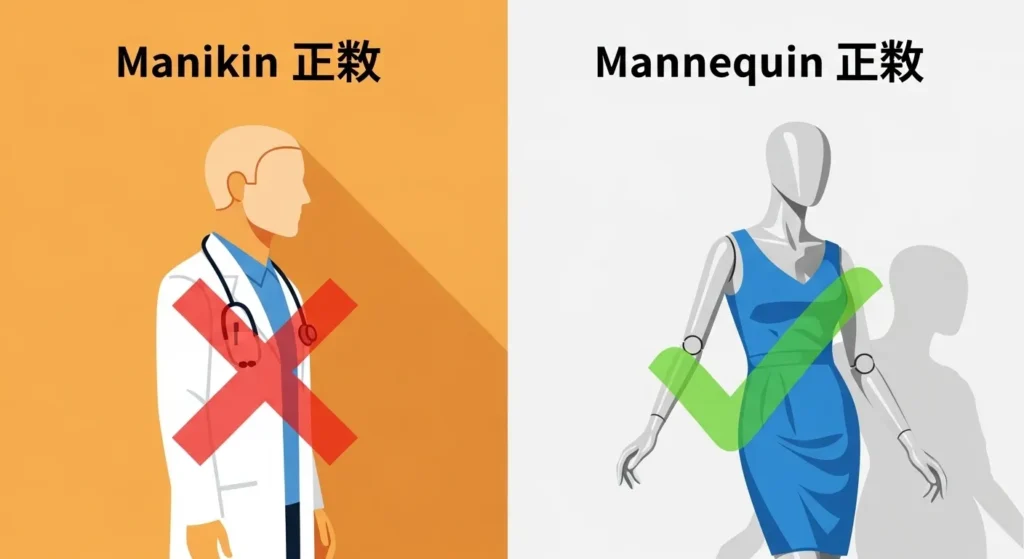
❌ Using manikin for shop displays
✅ Use mannequin
❌ Using mannequin in medical manuals
✅ Use manikin
❌ Thinking one spelling is wrong
✅ Both are correct
❌ Mixing both spellings in one article
✅ Stay consistent
❌ Assuming it’s UK vs US spelling
✅ It’s about context, not country
Manikin or Mannequin in Everyday Examples
Emails
“Please clean the mannequins before the sale.”
News
“Hospitals invest in advanced CPR manikins.”
Social Media
“That mannequin looks more stylish than me 😂”
Formal Writing
“The training program uses a full size medical manikin.”
Manikin or Mannequin ; Google Trends & Usage Data
Search data shows clear patterns:
Mannequin
- More popular worldwide
- High searches in:
- Fashion
- Retail
- E commerce
- Visual merchandising
- Fashion
Manikin
- Lower search volume
- Spikes in:
- Medical education
- CPR training
- Engineering labs
- Medical education
By Country
- US, UK, Canada → Mannequin dominates
- Medical searches globally → Manikin used consistently
This confirms that usage depends on industry, not location.
Manikin vs Mannequin ; Side by Side Comparison Table
| Feature | Manikin | Mannequin |
| Main Use | Training & medical | Fashion & retail |
| Field | Scientific, technical | Clothing, design |
| Origin Style | English adaptation | French spelling |
| Common Audience | Professionals | General public |
| Store display | ❌ | ✅ |
| Medical training | ✅ | ❌ |
FAQs
1. Is manikin a misspelling of mannequin?
No. Manikin is a correct word with a different use.
2. Can I use mannequin for CPR training?
No. Medical writing prefers manikin.
3. Which spelling is more common?
Mannequin is more common in everyday English.
4. Do Americans spell it differently than British people?
No. Both use the same spellings.
5. Is manikin only for medicine?
Mostly yes, but also used in engineering and safety training.
6. Can I use both in one article?
Only if you clearly separate the meanings.
Conclusion
The confusion between manikin or mannequin is very common but now it should be crystal clear. Both words are correct. Both come from the same origin. But they serve different purposes.
Use mannequin when talking about fashion, clothing, stores, or display figures. This spelling is widely recognized and understood by the general public.
Use manikin when writing about medical training, CPR practice, safety drills, or technical education. This spelling is preferred by professionals and institutions.
The key is context. Once you know the setting, the correct spelling becomes easy. Avoid mixing them, stay consistent, and your writing will look professional and accurate.
In short:
👗 Fashion → Mannequin
🩺 Training → Manikin
Choose wisely, and you’ll never get this wrong again.
Read more about !
Tardys or Tardies ⏰🤔: Which Spelling Is Correct?

My name is Noam Chomsky. I am a linguist, philosopher, and political thinker. I am best known for my work in English grammar and linguistics, especially for developing generative grammar.I studied at the University of Pennsylvania, where I earned my PhD in linguistics. Later, I joined the Massachusetts Institute of Technology (MIT) and taught there for many years. My book “Syntactic Structures” changed the way people understand language and grammar.