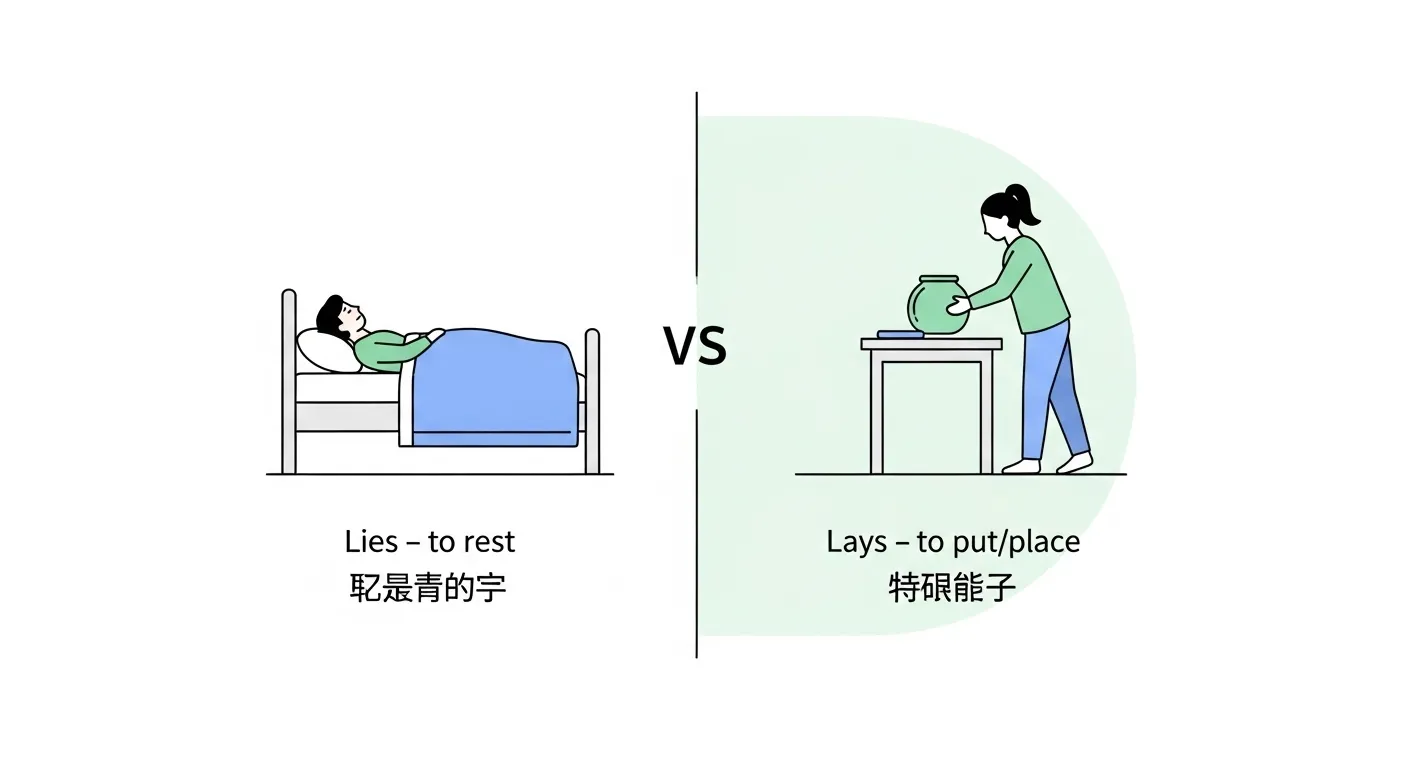
“Lies” means to rest (no object) 🛌, while “lays” means to put something down (needs an object) 📦
Many people get confused between lies and lays. These two words look similar and sound close, but they have very different meanings. This confusion is common in daily English, emails, and even professional writing.
People often search for “lies or lays” because they are unsure which word is correct in a sentence. The problem comes from the verbs lie and lay, which change forms in tricky ways. For example, “lie” becomes “lies,” and “lay” also changes depending on tense.
In simple words, lies means to rest or recline, while lays means to put something down. This small difference can change the meaning of a sentence completely. In this guide, you will learn the correct usage, simple rules, examples, and tips to avoid mistakes. By the end, you will feel confident using lies and lays correctly.
Lies or Lays – Quick Answer
- Lies = to rest or recline (no object needed)
👉 Example: The cat lies on the sofa. - Lays = to put something down (needs an object)
👉 Example: She lays the book on the table.
✅ One-line answer:
Lies means to rest, while lays means to place something.
The Origin of Lies or Lays
The confusion comes from two old English verbs:
- Lie (to rest)
- From Old English licgan
- Does not need an object
- Lay (to put)
- From Old English lecgan
- Always needs an object
👉 Why it’s confusing:
- “Lay” is also the past tense of “lie”
- This overlap makes learning harder
Example:
- Today: I lie down
- Yesterday: I lay down
British English vs American English Spelling
There is no spelling difference between British and American English.
| Word | British English | American English | Meaning |
| Lies | Lies | Lies | Rest/recline |
| Lays | Lays | Lays | Put/place something |
✅ Same spelling, same rules.
Which Spelling Should You Use?
Choose based on meaning, not location.
Simple Rule:
- Use lies → when no object
- Use lays → when there is an object
Audience Tips:
- 🇺🇸 US → Follow grammar rule
- 🇬🇧 UK → Same usage
- 🌍 Global → Use simple check (object or not)
👉 Quick trick:
If you can answer “what?” → use lays
Common Mistakes with Lies or Lays
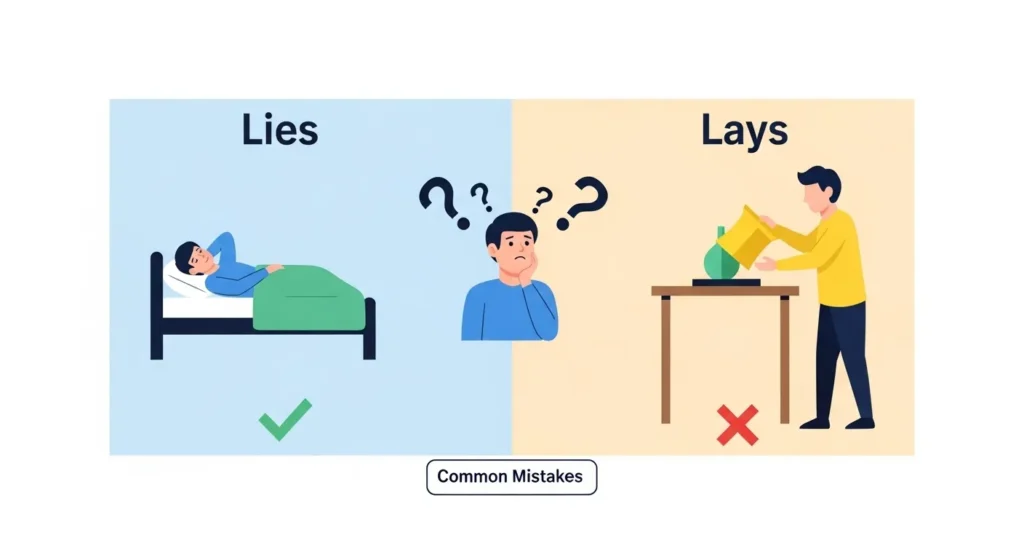
❌ He lays on the bed.
✔ He lies on the bed.
❌ She lies the book on the table.
✔ She lays the book on the table.
❌ Yesterday I laid down (wrong in some contexts)
✔ Yesterday I lay down
Why mistakes happen:
- Past tense confusion
- Mixing object vs no object
Lies or Lays in Everyday Examples
📧 Emails
- The file lies in the folder.
- She lays the papers on the desk.
📰 News
- The town lies near the river.
- The company lays the foundation for growth.
📱 Social Media
- He just lies there all day 😄
- She lays everything out clearly.
📊 Formal Writing
- The solution lies in better planning.
- The process lays the groundwork for success.
Lies or Lays – Google Trends & Usage Data
- “Lies or lays” is a highly searched grammar topic
- Popular in:
- United States
- United Kingdom
- India
- Pakistan
- Trends show:
- Students and writers search this often
- Confusion increases during exam seasons
👉 Insight:
Most searches come from people trying to avoid grammar mistakes.
Comparison Table: Lies vs Lays
| Feature | Lies | Lays |
| Meaning | Rest or recline | Put/place something |
| Object Needed | No | Yes |
| Example | He lies down | She lays the book |
| Verb Type | Intransitive | Transitive |
| Easy Tip | No object | Needs object |
FAQs
1. What is the difference between lies and lays?
Lies means to rest, while lays means to place something.
2. Which one needs an object?
Lays needs an object. Lies does not.
3. Is “he lays on the bed” correct?
No, it should be “he lies on the bed.”
4. Why is this confusing?
Because “lay” is also the past tense of “lie.”
5. Is there a UK vs US difference?
No, both use the same rules.
6. How can I remember the difference?
- Lies → relax
- Lays → place
7. What is the past tense of lie?
The past tense is lay.
Conclusion
The difference between lies and lays may seem small, but it is very important in clear writing. Lies is used when someone or something is resting and does not need an object. Lays, on the other hand, is used when placing something and always needs an object.
The main reason people get confused is because of verb tense changes. The word “lay” can act as both a present verb and a past form of “lie.” This overlap makes it tricky, but with practice, it becomes easy.
A simple trick can help: if your sentence includes an object, use lays. If not, use lies. This rule works in most situations.
By understanding this difference, you can avoid common mistakes and improve your English. Whether you are writing emails, essays, or posts, using the correct word makes your message clear and professional.
Read more about !
Baked or Fried: Which Cooking Method Is Better? 🍟🍞

Hello, I am Henry P. Whitmore, an English language scholar and grammar author known for my contributions to English grammar education. I am recognized for presenting complex grammatical rules in a clear, structured, and student-friendly manner, making my work valuable for learners, teachers, and non-native speakers of English.