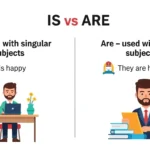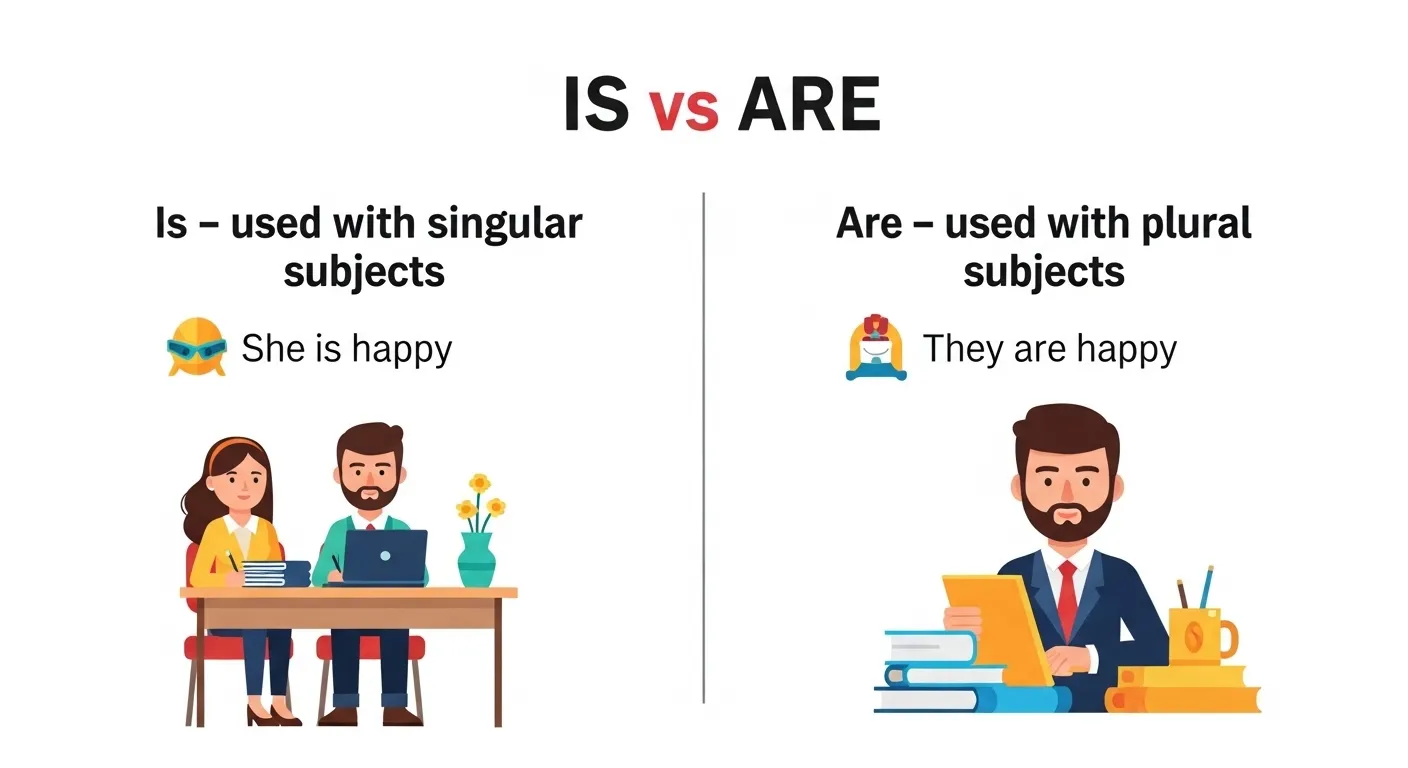
“Is” is used with singular subjects, while “are” is used with plural subjects. 📚
Many English learners often feel confused about “is” or “are.” These two small words appear everywhere in English sentences, but choosing the correct one can sometimes feel difficult. Because both words are forms of the verb “to be,” people frequently search online to understand when to use each form correctly.
The confusion usually happens when writers are unsure whether a subject is singular or plural. For example, should you write “The list is ready” or “The list are ready”? What about sentences like “There is many reasons” or “There are many reasons”? Small grammar mistakes like these can make writing look less professional.
Understanding the rule behind is and are is actually simple. The key idea is subject-verb agreement. A singular subject uses is, while a plural subject uses are. Once you know this rule, it becomes easy to choose the correct word.
In this guide, we will explain the meaning, origin, common mistakes, and correct usage of is or are, along with clear examples to help you master this basic but important grammar rule.
Is or Are – Quick Answer
The rule is simple:
- Is is used with singular subjects.
- Are is used with plural subjects.
Examples
Using “Is” (Singular)
- The book is on the table.
- She is happy.
- The dog is sleeping.
Using “Are” (Plural)
- The books are on the table.
- They are happy.
- The dogs are sleeping.
Quick Tip
If the subject refers to one person or thing → use “is.”
If it refers to more than one → use “are.”
The Origin of Is or Are
Both is and are come from the ancient English verb “to be.” This verb has existed in the English language for more than a thousand years.
The word is comes from the Old English word “is”, which was used to describe the state of a single person or object.
The word are developed from the Old English word “aron” or “earun.” Over time, the spelling became shorter and simpler, eventually becoming are.
The verb to be is one of the oldest and most irregular verbs in English, which is why it has many forms:
- am
- is
- are
- was
- were
- been
- being
Among these forms, is and are are used in the present tense.
British English vs American English Spelling
Unlike many English words, is and are do not change spelling between British English and American English. Both varieties use the same grammar rule.
The difference is not about spelling but about correct subject-verb agreement.
Example Sentences
- The car is new.
- The cars are new.
These sentences are correct in both American and British English.
Comparison Table
| Subject Type | Correct Verb | Example |
| Singular noun | Is | The teacher is here. |
| Plural noun | Are | The teachers are here. |
| Singular pronoun | Is | He is ready. |
| Plural pronoun | Are | They are ready. |
This rule stays the same around the world.
Which Spelling Should You Use?
Choosing between is or are depends on the subject of the sentence.
Use Is When
The subject is singular.
Examples:
- My friend is here.
- The movie is interesting.
- The phone is broken.
Use Are When
The subject is plural.
Examples:
- My friends are here.
- The movies are interesting.
- The phones are broken.
Special Case: “You”
The pronoun you always uses are, even when referring to one person.
Example:
- You are my best friend.
Common Mistakes with Is or Are
Many learners make mistakes with these words. Here are some common ones.
1. Using “Is” with a Plural Subject
Incorrect:
- The students is ready.
Correct:
- The students are ready.
2. Using “Are” with a Singular Subject
Incorrect:
- The dog are barking.
Correct:
- The dog is barking.
3. Mistakes with “There is / There are”
Incorrect:
- There is many problems.
Correct:
- There are many problems.
Rule: The verb should match the real subject, not the word there.
Is or Are in Everyday Examples
These verbs appear in many types of writing.
Emails
- The meeting is tomorrow.
- The files are attached.
News Articles
- The president is speaking today.
- Experts are warning about climate change.
Social Media
- This movie is amazing!
- My friends are coming over tonight.
Formal Writing
- The results are available in the report.
- The conclusion is clear.
Is or Are – Google Trends & Usage Data
Search engines show that “is or are grammar” is a very common question worldwide. Many students and professionals search this phrase to improve their writing.
Countries with High Search Interest
Common searches come from:
- United States
- United Kingdom
- India
- Canada
- Australia
This happens because subject-verb agreement is one of the first grammar rules people learn when studying English.
Students often search this topic when writing essays, emails, or academic papers.
Is vs Are – Side-by-Side Comparison
| Feature | Is | Are |
| Verb Type | Form of “to be” | Form of “to be” |
| Subject Type | Singular | Plural |
| Example | The cat is sleeping | The cats are sleeping |
| Pronoun Example | He is here | They are here |
| Usage | One person or thing | More than one |
This simple table helps you quickly remember the difference.
FAQs
1. What is the difference between is and are?
Is is used with singular subjects, while are is used with plural subjects.
2. Can I use “are” with one person?
Normally no. However, the pronoun you always uses are, even when referring to one person.
Example:
You are correct.
3. Why is the verb “to be” confusing?
Because it has many forms like am, is, are, was, and were.
4. Is “there is many people” correct?
No. The correct sentence is “there are many people.”
5. Do British and American English use different rules?
No. Both use the same grammar rule for is and are.
6. Can “is” be used with names?
Yes.
Example:
Sarah is my friend.
7. What tense are is and are?
Both are present tense forms of the verb to be.
Conclusion
The difference between is and are is based on a simple grammar rule called subject-verb agreement. The verb must match the subject of the sentence. When the subject is singular, the correct verb is is. When the subject is plural, the correct verb is are.
Although the rule is simple, many people still make mistakes when writing quickly or when the sentence structure becomes complex. For example, sentences that begin with “there is” or “there are” often cause confusion because writers forget to match the verb with the real subject.
Fortunately, the solution is easy. Always look at the subject of the sentence first. If there is one person or thing, use is. If there are multiple people or things, use are. Practicing this rule with simple examples will quickly improve your grammar skills.
By mastering the difference between is and are, you can write clearer sentences, communicate more effectively, and avoid one of the most common grammar mistakes in English.
Read more about !
Sewing or Sowing 🧵🌱 — Meaning, Differences, and How to Use the Right Word