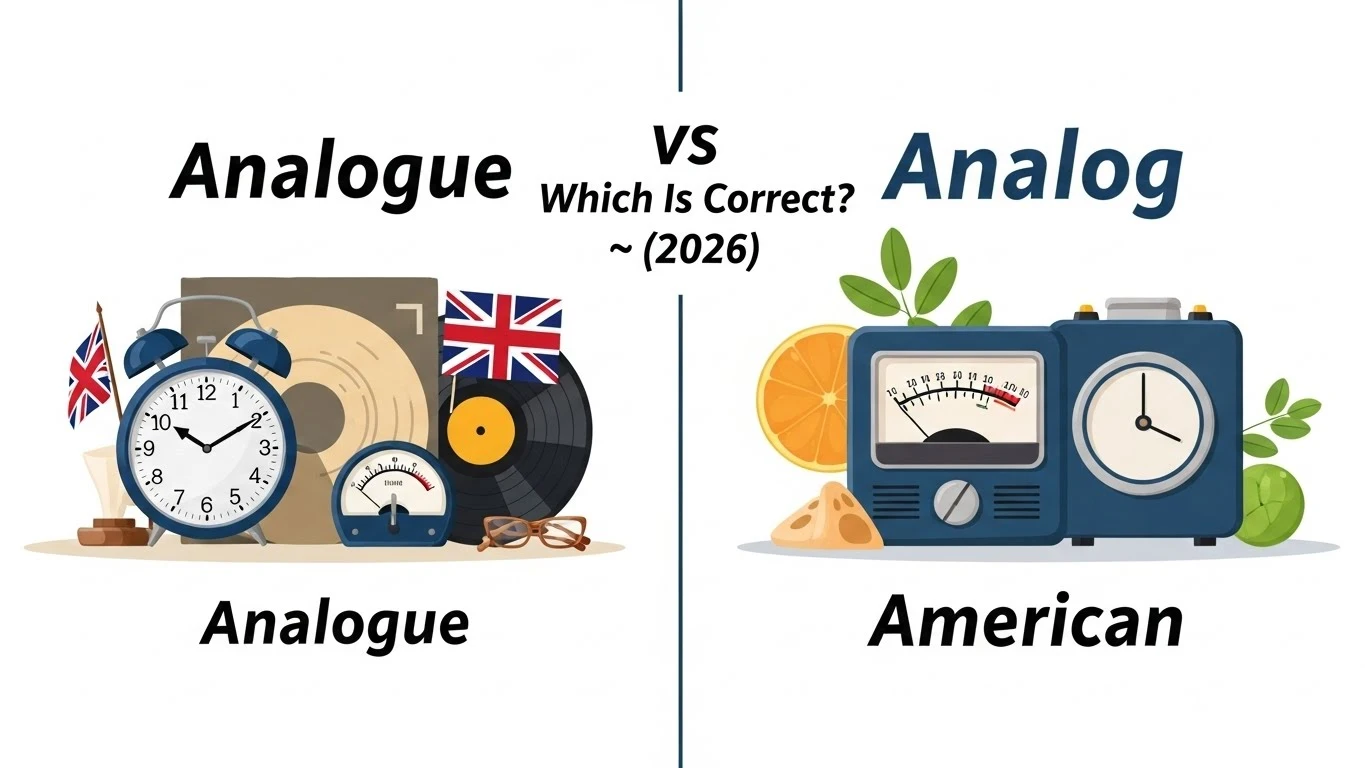
Both spellings are correct: “analog” is used in American English, while “analogue” is used in British English.
Many people search for “analogue or analog” because they see both spellings used in technology, science, music, watches, and everyday writing. One article talks about analog clocks, while another mentions analogue systems. This makes people wonder: are these two different words, or just different spellings?
The confusion mostly comes from British vs American English spelling rules. English is a global language, but spelling is not always the same everywhere. Words ending in -ogue and -og often cause trouble, especially for students, engineers, writers, and English learners.
People also search this keyword because it appears in technical contexts like analog vs digital, electronics, audio systems, and data processing. Using the wrong spelling does not change the meaning, but it can look inconsistent or unprofessional if you choose the wrong one for your audience.
This article explains analogue or analog in a clear and simple way. You will learn their meaning, history, correct usage, common mistakes, and which spelling you should use based on your audience.
Analogue or Analog : Quick Answer
✅ Analog is preferred in American English
✅ Analogue is preferred in British English
Examples:
- 🇺🇸 This watch uses an analog display.
- 🇬🇧 This watch uses an analogue display.
👉 Both spellings are correct. The difference is regional, not technical.
Read more about: Totalled or Totaled: Which Is Correct?2026
The Origin of Analogue or Analog
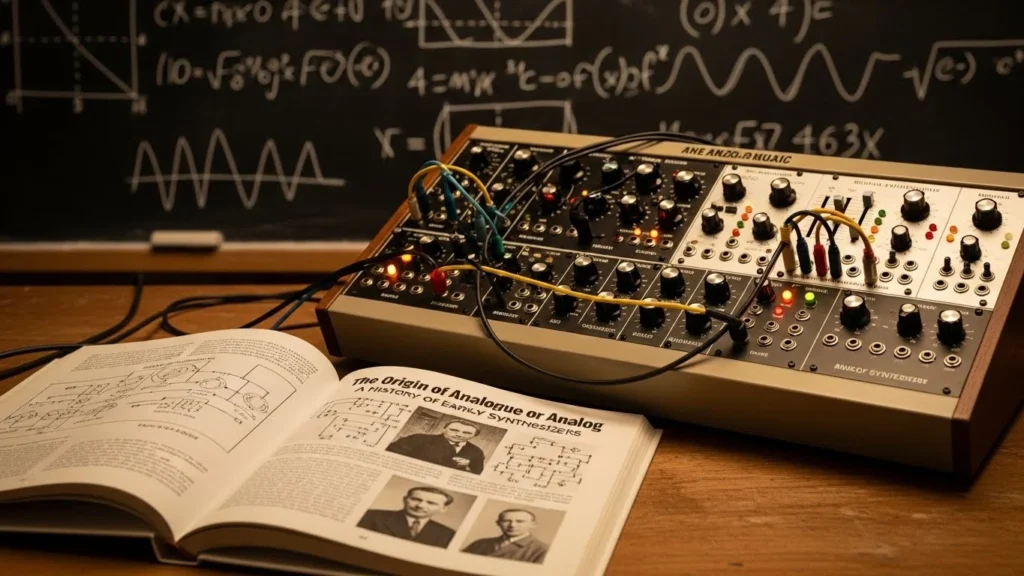
The word comes from the Greek word “analogos”, meaning proportionate or corresponding. It entered English through Latin and French as analogue.
In early English, analogue was the standard spelling everywhere. Later, American English began simplifying spellings to make them shorter and easier. As a result:
- British English kept analogue
- American English shortened it to analog
The meaning stayed the same. Only the spelling changed.
This pattern is common in English spelling differences between the UK and the US.
British English vs American English Spelling
This is a clear case of British vs American spelling variation.
Main Rule
- British English keeps -ogue
- American English shortens to -og
Comparison Table
| British English | American English |
| analogue | analog |
| catalogue | catalog |
| dialogue | dialog |
| monologue | monolog (less common) |
Both systems follow consistent rules.
Which Spelling Should You Use?
The correct choice depends on your audience and writing style.
Use Analog if:
- You write for a US audience
- You write technical or engineering content in US English
- You focus on global SEO audiences
Example:
- Analog signals change smoothly over time.
Use Analogue if:
- You write for a UK or Commonwealth audience
- You follow British academic standards
- You write UK-based publications
Example:
- Analogue photography is still popular.
Global Writing Tip
If your audience is worldwide, analog is often preferred because American English dominates online content.
Common Mistakes with Analogue or Analog
1. Mixing spellings in one document
❌ Analog circuits and analogue signals are discussed.
✅ Analog circuits and analog signals are discussed.
2. Thinking one spelling is wrong
❌ Analogue is incorrect.
✅ Both spellings are correct.
3. Assuming meaning is different
❌ Analog and analogue mean different things.
✅ They mean the same thing.
Easy Memory Tip
👉 US = shorter spelling → analog
👉 UK = longer spelling → analogue
Analogue or Analog in Everyday Examples
Emails
- ✅ We still use analog equipment.
- ✅ We still use analogue equipment.
News Writing
- ✅ The company switched from analog to digital systems.
- ✅ The museum displays analogue clocks.
Social Media
- ✅ I love analog watches ⌚
- ✅ Analogue cameras feel classic 📷
Formal & Technical Writing
- ✅ Analog data is continuous.
- ✅ Analogue systems rely on physical signals.
Analogue or Analog : Google Trends & Usage Data
Search data shows strong interest in “analogue or analog”, especially in technical and educational fields.
Regional Usage:
- Analog dominates searches in:
- United States
- Canada (mixed)
- Philippines
- Global tech content
- United States
- Analogue dominates searches in:
- United Kingdom
- Australia
- New Zealand
- India (British influence)
- United Kingdom
Common Contexts:
- Analog vs digital
- Electronics
- Audio equipment
- Watches
- Photography
Search engines recognize both spellings, but consistency improves clarity and SEO performance.
Analogue vs Analog : Comparison Table
| Feature | Analog | Analogue |
| English type | American | British |
| Correct spelling | ✅ Yes | ✅ Yes |
| Meaning | Continuous system | Continuous system |
| Used in US tech | ✅ Yes | ❌ Rare |
| Used in UK tech | ❌ Rare | ✅ Yes |
| SEO global use | High | Medium |
FAQs
1. Is analogue a spelling mistake?
No. It is correct in British English.
2. Is analog only American English?
Yes. It is the standard US spelling.
3. Do both words mean the same thing?
Yes. There is no difference in meaning.
4. Which spelling should engineers use?
Use the spelling standard of your country or organization.
5. Which spelling is better for SEO?
Analog usually performs better globally.
6. Can I use both spellings in one article?
No. Always stay consistent.
7. Is analog used more in technology?
Yes, especially in American technical writing.
Conclusion
The difference between analogue or analog is not about meaning, quality, or correctness. It is about regional spelling preferences. Both words come from the same origin and describe the same concept: something continuous rather than digital.
British English prefers analogue, while American English prefers analog. Neither spelling is wrong. The key is choosing the version that matches your audience and using it consistently throughout your writing.
Understanding this difference helps you write more clearly, professionally, and confidently especially in technical, academic, or content. Once you know your audience, choosing between analogue or analog becomes simple and stress-free.

Hello, I am Henry P. Whitmore, an English language scholar and grammar author known for my contributions to English grammar education. I am recognized for presenting complex grammatical rules in a clear, structured, and student-friendly manner, making my work valuable for learners, teachers, and non-native speakers of English.