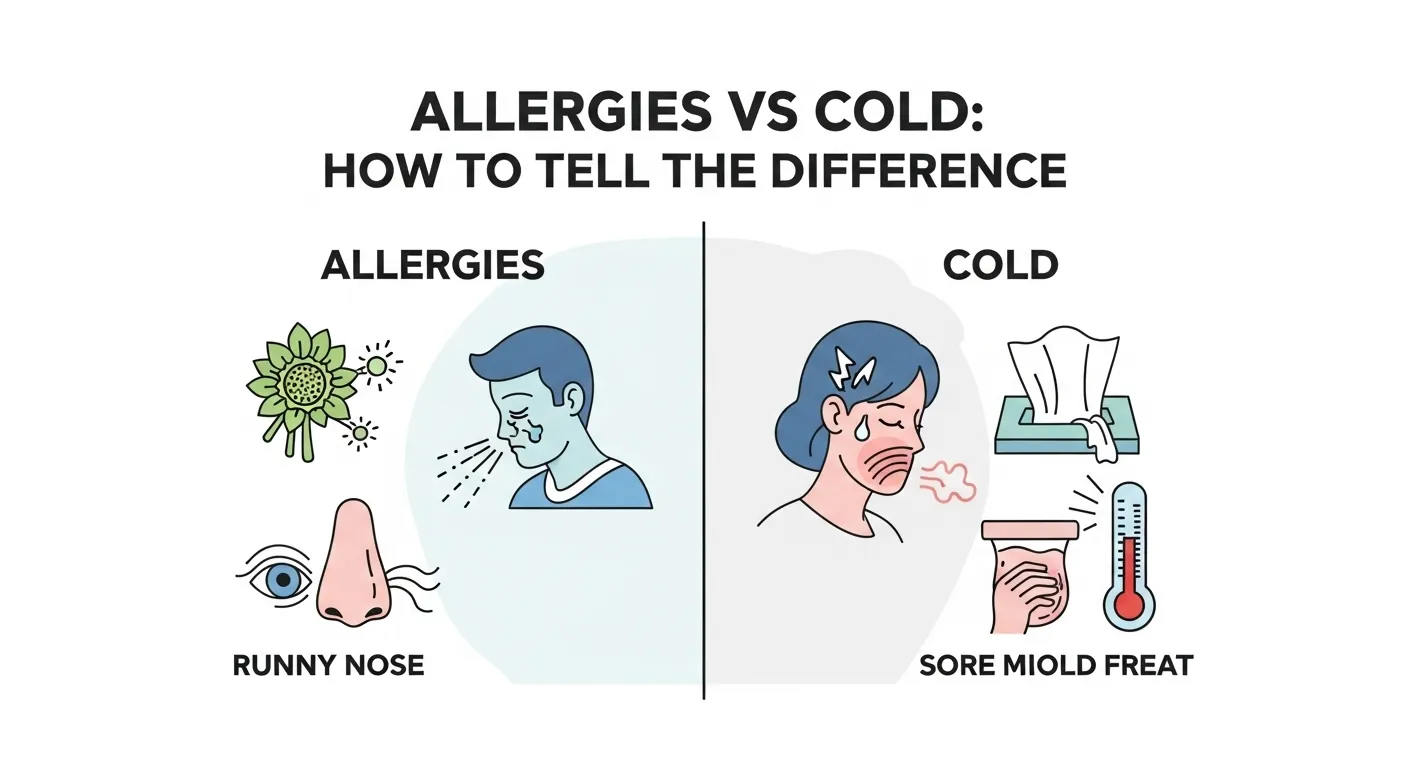
Allergies usually cause sneezing and itchy eyes without fever, while a cold often includes a sore throat, cough, and sometimes fever. 🤧🌼
Many people feel confused when they start sneezing, coughing, or feeling tired. They often ask a simple question: Is it allergies or a cold? The symptoms of these two conditions can look very similar.
Both can cause sneezing, a runny nose, and feeling uncomfortable. Because of this, people often search online to understand what they are experiencing.
Knowing the difference between allergies and a cold is important. The treatment for each condition is different.
If someone has allergies, they may need antihistamines or allergy control. If someone has a cold, rest and fluids are usually the best solution.
This confusion is very common during seasonal changes. For example, when spring arrives and pollen levels increase, many people think they have a cold. In reality, they may be experiencing seasonal allergies.
This guide will explain the difference between allergies and a cold, their symptoms, causes, treatment options, and common mistakes people make when identifying them.
By the end of this article, you will clearly understand how to recognize each condition and choose the right solution.
Allergies or Cold ; Quick Answer
The quick answer is simple:
Allergies happen when your immune system reacts to substances like pollen, dust, or pet hair. A cold is caused by a virus.
Here is a simple comparison:
| Symptom | Allergies | Cold |
| Cause | Immune reaction | Virus infection |
| Fever | Rare | Sometimes |
| Sneezing | Very common | Common |
| Itchy eyes | Very common | Rare |
| Duration | Weeks or months | 5;10 days |
Example
If you have itchy eyes and frequent sneezing when flowers bloom, it is likely allergies.
If you have a sore throat, fever, and tiredness for several days, it is probably a cold.
The Origin of Allergies or Cold
The words allergies and cold have interesting histories.
The word allergy comes from Greek. It was first used by the Austrian doctor Clemens von Pirquet in 1906. The term combines two Greek words:
- allos ; meaning “different”
- ergon ; meaning “reaction”
So the word allergy means a different or unusual reaction by the immune system.
The word cold has been used for centuries to describe respiratory infections. In the past, people believed cold weather caused illness. That is why the infection became known as the common cold.
Over time, medical science discovered that colds are actually caused by viruses, especially rhinoviruses.
British English vs American English Spelling
Unlike many English words, allergies and cold are spelled the same in both British and American English.
However, there can be slight differences in medical terminology and expression.
Example
| American English | British English |
| Allergy season | Hay fever season |
| Runny nose | Streaming nose |
| Cold medicine | Cold remedy |
Comparison Table
| Feature | Allergies | Cold |
| American spelling | Same | Same |
| British spelling | Same | Same |
| Meaning | Immune reaction | Viral infection |
| Usage | Medical and daily conversation | Everyday health term |
The spelling stays the same worldwide, so there is no confusion in writing.
Which Spelling Should You Use?
Since allergies and cold do not change spelling between English varieties, you can use the same terms for all audiences.
However, the context and vocabulary may vary slightly.
For American Readers
Use terms like:
- seasonal allergies
- allergy medicine
- common cold
Example:
- Many Americans suffer from seasonal allergies during spring.
For British Readers
You might also hear:
- hay fever
- cold symptoms
Example:
- Pollen levels can trigger hay fever allergies.
For Global Readers
The safest approach is to use simple medical terms like:
- allergies
- cold
- symptoms
- treatment
This ensures that readers everywhere understand the message.
Common Mistakes with Allergies or Cold

Many people confuse allergies with a cold because the symptoms overlap.
Here are some common mistakes.
Mistake 1: Assuming Sneezing Means a Cold
Sneezing happens in both conditions.
Correct understanding:
- Sneezing with itchy eyes often means allergies.
- Sneezing with body aches often means a cold.
Mistake 2: Taking Cold Medicine for Allergies
Cold medicine may not help allergy symptoms.
Correct approach:
- Allergies respond better to antihistamines.
Mistake 3: Ignoring Symptom Duration
Colds usually last about one week.
Allergies can last weeks or months, especially during pollen season.
Mistake 4: Thinking Cold Weather Causes Colds
Cold weather does not directly cause colds. Viruses cause them.
However, people spend more time indoors during winter, which allows viruses to spread.
Allergies or Cold in Everyday Examples
People talk about these conditions in many daily situations.
Emails
- I may work from home today because my allergies are very bad.
- I caught a cold, so I will join the meeting tomorrow.
News
- Pollen levels are rising, causing allergy symptoms across the country.
- Doctors warn about an increase in cold infections this winter.
Social Media
- Spring is beautiful, but my allergies are terrible.
- I think I caught a cold after traveling.
Formal Writing
- Seasonal allergies affect millions of people each year.
- The common cold remains one of the most frequent viral infections worldwide.
Allergies or Cold ; Google Trends & Usage Data
Search data shows that people frequently look up “allergies or cold symptoms.”
This is especially common during:
- spring allergy season
- winter cold season
Search Trend Patterns
| Season | Popular Search |
| Spring | allergies symptoms |
| Summer | pollen allergy |
| Fall | allergies vs cold |
| Winter | cold symptoms |
Popular Search Countries
| Country | Common Search |
| United States | allergies or cold |
| Canada | cold vs allergies |
| United Kingdom | hay fever vs cold |
| Australia | allergy symptoms |
This shows that people worldwide want to understand the difference between these conditions.
Comparison Table: Allergies vs Cold
| Feature | Allergies | Cold |
| Cause | Immune system reaction | Virus infection |
| Fever | Rare | Sometimes |
| Itchy eyes | Very common | Rare |
| Sneezing | Frequent | Frequent |
| Body aches | Rare | Common |
| Duration | Weeks or months | 5;10 days |
| Contagious | No | Yes |
FAQs ;
1. How can I tell if I have allergies or a cold?
If you have itchy eyes and sneezing without fever, it is likely allergies.
If you have fever and body aches, it is likely a cold.
2. Can allergies cause a sore throat?
Yes. Post nasal drip from allergies can irritate the throat.
3. Are colds contagious?
Yes. The common cold spreads easily through viruses.
4. Are allergies contagious?
No. Allergies cannot spread from person to person.
5. How long do allergies last?
Allergies can last weeks or months, depending on exposure to triggers.
6. What triggers allergies?
Common triggers include:
- pollen
- dust mites
- pet hair
- mold
7. When should I see a doctor?
You should see a doctor if:
- symptoms last more than 10 days
- you have severe breathing problems
- symptoms become worse.
Conclusion
Understanding the difference between allergies and a cold can help you manage your health more effectively. Although the symptoms can look very similar, the causes are completely different.
Allergies happen when your immune system reacts to substances like pollen, dust, or pet hair. A cold, on the other hand, is caused by a virus that spreads from person to person.
One of the easiest ways to tell the difference is by looking at your symptoms. Allergies often cause itchy eyes, frequent sneezing, and long lasting symptoms.
Colds usually include fever, sore throat, body aches, and fatigue, and they normally last about a week.
Knowing this difference helps you choose the right treatment. Allergy symptoms may improve with antihistamines and avoiding triggers.
Cold symptoms usually require rest, fluids, and time for the body to recover.
If symptoms become severe or last longer than expected, it is always best to consult a healthcare professional.
By learning how to recognize the signs of allergies or a cold, you can make better health decisions and feel better faster.
Read more about ;
Is or Are: Which One Is Correct and How to Use It Properly? 📚

Hello, I am Henry P. Whitmore, an English language scholar and grammar author known for my contributions to English grammar education. I am recognized for presenting complex grammatical rules in a clear, structured, and student-friendly manner, making my work valuable for learners, teachers, and non-native speakers of English.