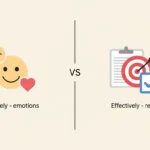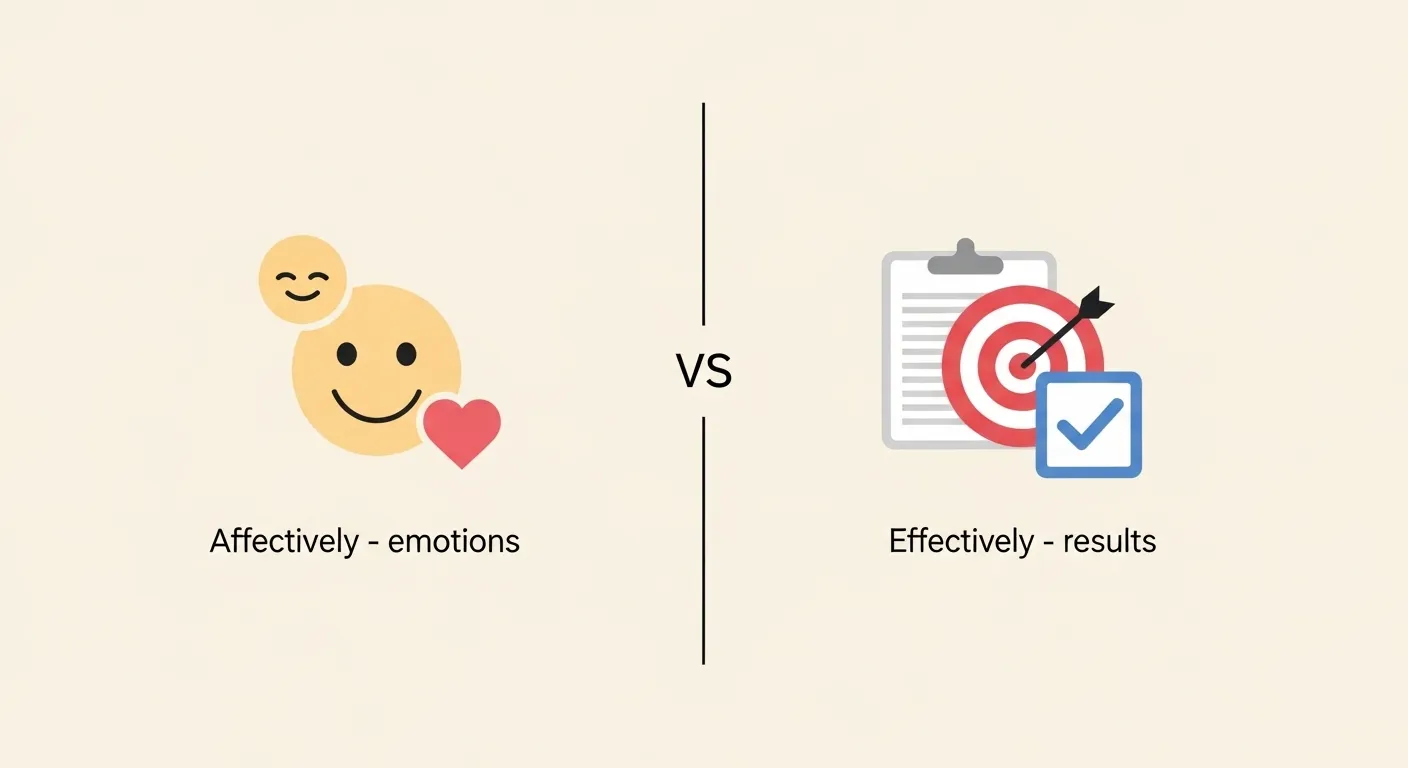
Effectively means doing something successfully ✔️, while affectively relates to emotions 😊
Many people get confused between affectively and effectively. These words look similar, sound alike, and are often used in similar situations. But their meanings are very different. This confusion can lead to mistakes in emails, essays, and professional writing.
People usually search for “affectively or effectively” when they want to sound clear and correct. Using the wrong word can change the meaning of a sentence or make writing seem unprofessional. So, understanding the difference is important.
In simple terms, affectively relates to emotions, while effectively relates to results or success. This article will help you understand the difference, avoid common mistakes, and choose the right word every time. Let’s make it easy and clear.
Affectively or Effectively – Quick Answer
- Affectively = related to emotions or feelings
👉 Example: She responded affectively to the sad story. - Effectively = done in a successful or efficient way
👉 Example: He completed the task effectively.
✅ One-line answer:
Affectively deals with feelings, while effectively means doing something well or successfully.
The Origin of Affectively or Effectively
Both words come from Latin roots, which is why they look similar.
- Affectively
- Comes from affect (Latin: afficere)
- Means “to influence emotions”
- Used in psychology and emotional contexts
- Effectively
- Comes from effect (Latin: effectus)
- Means “result” or “outcome”
- Used in productivity, work, and performance
👉 The confusion exists because both words share similar spelling and pronunciation, but their meanings developed differently over time.
British English vs American English Spelling
Good news: there is no spelling difference between British and American English for these words.
| Word | British English | American English | Meaning |
| Affectively | Affectively | Affectively | Emotional way |
| Effectively | Effectively | Effectively | Successful/efficient way |
✅ Both versions use the same spelling and meaning.
Which Spelling Should You Use?
It depends on your meaning, not your location.
- Use affectively when talking about feelings or emotions
- Use effectively when talking about results or success
Audience Tips:
- 🇺🇸 US audience → Use based on meaning (no change)
- 🇬🇧 UK audience → Same rule applies
- 🌍 Global writing → Prefer effectively (more common in daily use)
👉 In most cases, people need effectively more often.
Common Mistakes with Affectively or Effectively
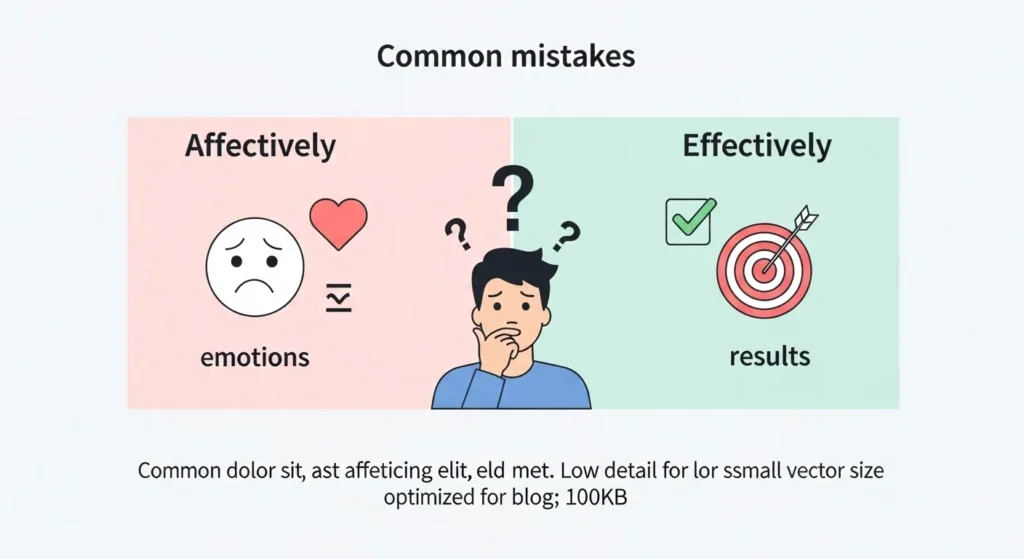
❌ Incorrect: She managed the team affectively.
✔ Correct: She managed the team effectively.
❌ Incorrect: He spoke effectively about his emotions.
✔ Correct: He spoke affectively about his emotions.
Common Errors:
- Mixing emotional meaning with performance meaning
- Using affectively when you mean “successfully”
- Overusing effectively in emotional contexts
👉 Tip:
If it’s about feelings → affectively
If it’s about results → effectively
Affectively or Effectively in Everyday Examples
📧 Emails
- We handled the issue effectively.
- She communicated affectively with the patient.
📰 News
- The policy was implemented effectively.
- The speech connected affectively with the audience.
📱 Social Media
- This video speaks affectively about mental health.
- He explains the topic effectively.
📊 Formal Writing
- The system works effectively.
- Emotional responses are studied affectively.
Affectively or Effectively – Google Trends & Usage Data
- Effectively is far more popular worldwide
- Common in business, education, and daily communication
- High usage in countries like:
- United States
- United Kingdom
- Canada
- Australia
- Affectively
- Less common
- Mostly used in psychology and academic writing
👉 Conclusion:
Most people search for this keyword because they accidentally use affectively instead of effectively.
Comparison Table: Affectively vs Effectively
| Feature | Affectively | Effectively |
| Meaning | Related to emotions | Done well or successfully |
| Usage | Psychology, feelings | Work, tasks, results |
| Frequency | Rare | Very common |
| Example | React affectively | Work effectively |
| Easy Memory Tip | “Affect = Emotion” | “Effect = Result” |
FAQs
1. What is the main difference between affectively and effectively?
Affectively relates to emotions, while effectively means doing something successfully.
2. Is affectively a common word?
No, it is mostly used in psychology or emotional contexts.
3. Which word should I use in professional writing?
Use effectively in most professional situations.
4. Can affectively and effectively be used interchangeably?
No, they have different meanings and should not be mixed.
5. Why do people confuse these words?
Because they look and sound similar.
6. Is there a spelling difference in UK and US English?
No, both use the same spelling.
7. How can I remember the difference easily?
- Affect → Emotion
- Effect → Result
Conclusion
Understanding the difference between affectively and effectively can improve your writing instantly. These words may look alike, but they serve very different purposes. Affectively is all about emotions and feelings, while effectively focuses on results and success.
In everyday communication, effectively is far more common and useful. Whether you are writing emails, reports, or social media posts, choosing the right word helps you sound clear and professional. Misusing these words can confuse readers or change your message.
The best way to remember is simple: emotions vs results. If your sentence is about feelings, use affectively. If it’s about getting things done well, use effectively. With this clear rule, you can avoid mistakes and write with confidence.
Read more about!
Shinny vs Shiny: Which Spelling Is Correct? ✨

Hello, I am Henry P. Whitmore, an English language scholar and grammar author known for my contributions to English grammar education. I am recognized for presenting complex grammatical rules in a clear, structured, and student-friendly manner, making my work valuable for learners, teachers, and non-native speakers of English.